Best Indoor Air Quality Monitors 2026
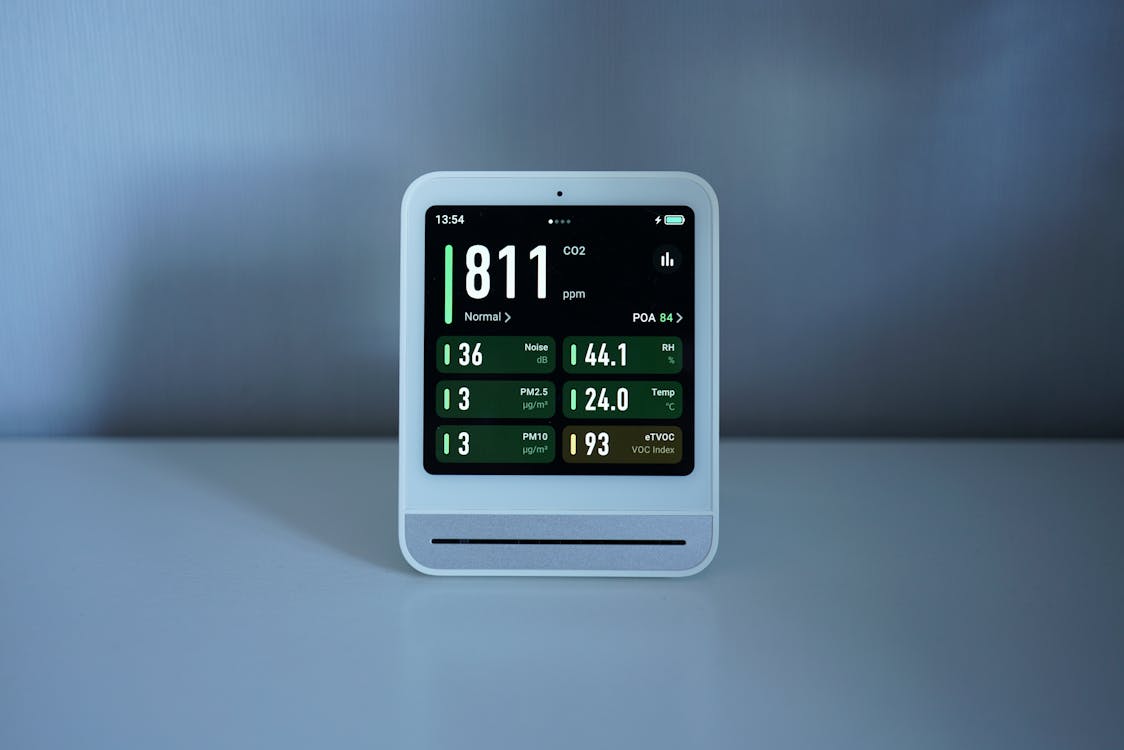
Most people assume the air inside their home is safe — but research suggests indoor air can be 2–5 times more polluted than the air outside. From VOCs off-gassing from furniture, to CO2 building up in sealed bedrooms, to invisible PM2.5 particles from cooking or wildfire smoke drifting through windows, the threats are real and largely invisible. A good indoor air quality monitor makes the invisible visible, giving you the data to act before symptoms appear.
This guide covers six of the best indoor air quality monitors of 2026 — from a $37 budget pick to a $230 whole-home powerhouse — so you can choose the right tool for your space and budget.
Why Indoor Air Quality Matters in 2026
Air pollution contributes to an estimated 6.7 million deaths globally every year, according to the Clean Air Fund. What's less discussed is how much of that exposure happens indoors. Sealed, energy-efficient homes trap pollutants that were once diluted by natural ventilation. New furniture, fresh paint, synthetic carpets, and even gas cooking can spike VOC and PM2.5 levels for hours after exposure — with no visible sign that anything is wrong.
CO2 is another quiet threat. Research suggests that CO2 concentrations above 1,000 ppm — easily reached in a bedroom with the door closed — are associated with drowsiness, difficulty concentrating, and disrupted sleep. In offices or classrooms, high CO2 levels can meaningfully reduce cognitive performance. An air quality monitor with a CO2 sensor gives you a real-time read on whether you need to crack a window.
Wildfires have added another dimension to the problem. Scientists reported in early 2026 that wildfires release far more air-polluting gases than previously estimated, with many of those emissions transforming into fine PM2.5 particles that penetrate deep into the lungs. Even if you're hundreds of miles from an active fire, smoke can push PM2.5 indoors to hazardous levels within hours. The vivavenly.com guide to air purifiers for wildfire smoke covers how to respond once you detect a spike — but first, you need a monitor to catch it.
What to Look for in an Indoor Air Quality Monitor
Sensor Types and Pollutants Tracked
Not all monitors are equal. The baseline pollutants worth tracking are PM2.5 (fine particulate matter), CO2, VOCs (volatile organic compounds), temperature, and humidity. More advanced monitors add radon, CO, NO2, or formaldehyde.
The critical distinction is sensor quality. For CO2, look for an NDIR (non-dispersive infrared) sensor — the same technology used in lab equipment. Many budget devices use cheaper electrochemical sensors that drift significantly over time and require frequent manual recalibration. NDIR sensors are more expensive but far more reliable over months of use.
Display, App, and Smart Home Integration
A monitor that buries data inside an app you have to open manually loses most of its value. The best monitors offer an always-on display with a clear color-coded indicator, so you can see at a glance whether your air is good, moderate, or poor. App quality matters too — look for historical data charts, custom alert thresholds, and export options.
If you use a smart home platform, consider integration. Airthings works with Apple HomeKit, Google Home, and Amazon Alexa. The Amazon Smart Monitor integrates natively with Alexa. Awair connects via IFTTT and direct integrations with smart thermostats.
Budget Tiering: What Each Price Range Gets You
- Under $40: PM2.5 and basic temperature/humidity. Good for wildfire smoke detection.
- $50–$80: Adds VOC detection and improved accuracy. The Amazon Smart Monitor at $70 is the sweet spot here.
- $100–$160: NDIR CO2 sensors, better apps, and broader pollutant coverage. This tier is ideal for anyone concerned about sleep quality or home office productivity.
- $200+: Radon detection, seven or more pollutants, long battery life, full smart home integration. Worth it for families in older homes or high-radon regions.
Best Indoor Air Quality Monitors 2026: Our Top Picks
| Model | Best For | Pollutants | CO2 Sensor | Price |
|---|---|---|---|---|
| Airthings View Plus | Whole-home coverage | 7 incl. radon | NDIR | ~$230 |
| Aranet4 HOME | CO2 accuracy | CO2, temp, humidity | NDIR | ~$100 |
| Awair Element | Smart home users | 5 | NDIR | ~$150 |
| Amazon Smart Monitor | Alexa households | 5 | No | ~$70 |
| Temtop M10+ | Budget multi-sensor | 6 | No | ~$50 |
| GoveeLife Monitor | Entry-level PM2.5 | 3 | No | ~$37 |
Airthings View Plus (~$230)
The Airthings View Plus is the most comprehensive consumer air quality monitor available in 2026, and it earns that position by doing something no other home device does: tracking radon. Radon is a naturally occurring radioactive gas that seeps up through soil and into basements and ground-floor rooms. It's the second-leading cause of lung cancer in the US after smoking, and it's completely odorless and invisible. The View Plus is the only device on this list — and one of very few consumer products period — that gives you continuous radon readings.
Beyond radon, the View Plus tracks six additional parameters: PM2.5, CO2, VOCs, humidity, temperature, and air pressure. Data syncs to the Airthings app over Wi-Fi, where you can review historical trends and set custom thresholds for alerts. Battery life is exceptional — up to two years on six AA batteries — meaning this isn't a device you'll need to charge or plug in if you'd rather not.
The e-ink display shows current readings at a glance, and the color-coded indicator makes it easy to assess at a distance. Smart home integration covers Apple HomeKit, Google Home, and Amazon Alexa. The only real drawback is the price: at $230, it's a significant investment. But for families in older homes, regions with known radon risk, or anyone who wants the most complete picture of their indoor air, it's the clear top pick.
Best for: Whole-home monitoring, radon detection, families in older homes
Aranet4 HOME (~$100)
If CO2 monitoring is your primary concern — and for many people it should be — the Aranet4 HOME is the gold standard. Its NDIR CO2 sensor is the same class of technology used in professional lab equipment, and its readings are consistently more accurate and more stable over time than the electrochemical sensors found in cheaper devices. That matters because CO2 drift is real: a poorly calibrated sensor might tell you your bedroom CO2 is 700 ppm when it's actually closer to 1,200 ppm.
The Aranet4 is small, lightweight, and entirely portable — it runs on two AA batteries for up to four years. This makes it uniquely useful as a portable tool: carry it to your office to check ventilation, place it in your child's bedroom at night, or bring it to a hotel room to assess air quality before sleeping. The e-ink display shows CO2, temperature, humidity, and an atmospheric pressure reading, refreshing every one to ten minutes depending on your setting.
The trade-off is narrow scope. The Aranet4 doesn't track PM2.5, VOCs, or radon. If those are priorities, you'll need a companion device. But as a dedicated CO2 monitor — particularly for anyone optimizing sleep quality or work-from-home focus — nothing at this price comes close.
Best for: CO2 monitoring for sleep, office productivity, and portable use
Awair Element (~$150)
The Awair Element sits in a well-considered middle ground: five pollutants (CO2, VOCs, PM2.5, temperature, and humidity), an NDIR CO2 sensor for reliable readings, and an app that experts consistently rank among the best in the category. The interface shows both a numerical Air Quality Score and individual pollutant bars, making it easy to understand not just whether your air is good but what's driving any problems.
The Element's app generates tailored recommendations based on your readings — open a window, run an air purifier, or adjust your thermostat — which gives it a slight edge for users who want guidance rather than just raw data. It also integrates with smart home platforms including Amazon Alexa, Google Assistant, and IFTTT, allowing you to trigger automations when pollutant levels exceed your thresholds.
One thing worth noting: the Element does not track radon or CO. For those parameters, the Airthings View Plus is the better choice. But for a five-pollutant monitor with a class-leading app and reliable NDIR CO2 measurement, the Awair Element delivers strong value at $150.
Best for: Smart home integration, detailed app insights, bedroom and home office use
Amazon Smart Air Quality Monitor (~$70)
Amazon's entry into the air quality monitor market is surprisingly good for the price. At $70, it tracks five key parameters: PM2.5, VOCs, carbon monoxide, humidity, and temperature. It uses a color-coded LED ring to show air quality at a glance — green, yellow, or red — with detailed breakdowns available in the Alexa app. If air quality drops below your threshold, it can announce a warning through any Echo device in your home.
The integration with Alexa is seamless and genuinely useful. You can ask Alexa "what's the air quality?" and get an immediate read without opening an app. Routines can be set to trigger automatically — for example, running a smart fan when PM2.5 spikes. For households already invested in the Amazon ecosystem, this is the natural choice.
The limitations are real, though. There is no NDIR CO2 sensor (the device tracks CO, not CO2), and there's no standalone display — you need the Alexa app to see detailed readings. If CO2 monitoring for sleep or focus is your goal, step up to the Aranet4 or Awair Element. But for Alexa households wanting affordable PM2.5 and VOC tracking with smart home automation, this monitor punches above its weight.
Best for: Alexa users, PM2.5 and VOC monitoring, smart home automation
Temtop M10+ (~$50)
The Temtop M10+ is a solid mid-budget option that tracks six parameters: AQI, PM2.5, PM10, HCHO (formaldehyde), TVOC, and humidity/temperature. It's one of the few sub-$60 monitors to include formaldehyde detection, which is useful in newly furnished or renovated spaces where off-gassing can be significant.
The display is clear and readable in all lighting conditions, and the device is compact enough to move between rooms easily. Accuracy on PM2.5 is generally well-regarded for the price point. The CO2 sensor is electrochemical rather than NDIR, meaning it may drift over time and benefits from periodic manual recalibration — a minor inconvenience but worth knowing before purchase.
There's no app and no Wi-Fi connectivity, which means no historical data or remote alerts. This is a strictly local, real-time device. For many users that's fine — you check it when you walk into a room, and the AQI reading tells you whether to open a window or run a purifier. As part of a larger air quality strategy — monitor with the Temtop, clean with one of the purifiers on our home air quality guide — it delivers real value at an accessible price.
Best for: Budget PM2.5 and formaldehyde monitoring, newly renovated spaces
GoveeLife Air Quality Monitor (~$37)
At $37, the GoveeLife is the most affordable monitor on this list and the right answer for one specific question: do I have a PM2.5 problem right now? It tracks PM2.5, temperature, and humidity, displays readings on a clear LCD screen, and connects to the Govee Home app for basic historical logging and alerts.
The accuracy is adequate for home use — good enough to tell you when wildfire smoke is infiltrating your space or when cooking is spiking fine particles. What it won't tell you is anything about CO2, VOCs, radon, or CO. If you have broader air quality concerns, this isn't the right tool. But as a gateway monitor for renters, students, or anyone who wants to start tracking air quality without a major financial commitment, it's a useful first step.
Best for: Entry-level PM2.5 monitoring, tight budgets, renters
Frequently Asked Questions
Do I need an air quality monitor if I already have an air purifier?
Yes — they serve different functions. An air purifier cleans the air; a monitor tells you whether the cleaning is working and when conditions change. Without a monitor, you're running your purifier on a fixed schedule rather than in response to actual pollutant levels. The combination of a monitor and a purifier is significantly more effective than either alone.
What is a safe indoor CO2 level?
Research suggests CO2 levels below 800 ppm are generally considered good. Between 800–1,000 ppm, some people notice mild drowsiness. Above 1,000 ppm — common in sealed bedrooms or meeting rooms — studies indicate measurable declines in cognitive performance and sleep quality. Open a window or run a ventilation fan if your monitor reads above 1,000 ppm.
How dangerous is radon, and do I need to test for it?
Radon is the second-leading cause of lung cancer in the US after smoking, responsible for approximately 21,000 deaths per year according to the EPA. It's present at some level in virtually every home, and levels vary significantly by geography, geology, and home construction. If you live in a ground-floor space or basement — especially in a region with known radon risk — continuous monitoring with a device like the Airthings View Plus is worth the investment.
What's the difference between PM2.5 and PM10?
PM2.5 refers to fine particulate matter with a diameter of 2.5 micrometers or less — small enough to penetrate deep into the lungs and enter the bloodstream. PM10 includes slightly larger particles up to 10 micrometers, which are filtered more effectively by the upper respiratory tract. PM2.5 is the more health-critical measurement for most purposes, and it's the one tracked by almost all air quality monitors on this list.
Can these monitors detect carbon monoxide (CO)?
Only the Amazon Smart Air Quality Monitor on this list tracks carbon monoxide (CO). For dedicated CO detection and life-safety alerts, a standalone CO detector is still recommended — they're purpose-built with faster alarm thresholds than general-purpose air quality monitors.
How often should I check my indoor air quality readings?
With a monitor that has an always-on display, a quick glance when you wake up and when you return home covers most scenarios. If you set up app alerts for PM2.5 or CO2 thresholds, the monitor will notify you when action is needed. Most experts suggest reviewing weekly historical data to spot patterns — a bedroom CO2 spike every night at 2am, for example, points to a ventilation issue worth addressing.
Shop these picks
Related guides