Coway AP-1512HH Mighty Review 2026: Still the Best Buy?
Coway AP-1512HH Mighty Review (2026): Still the Best Buy?
The Coway AP-1512HH Mighty has been the default answer to "which air purifier should I buy?" on Reddit, Wirecutter, and Consumer Reports for nearly a decade. It is small enough for a bedroom, quiet enough for an office, and cheap enough that allergy sufferers do not have to think twice. The bottom-line verdict in 2026: it is still the most sensible HEPA purifier you can buy for a small-to-medium room, with two important caveats that most reviews skip over.
Quick verdict: Buy the Coway AP-1512HH Mighty if you want proven HEPA filtration for a 200 to 250 sq ft room without paying for smart features you will not use. Skip it if you need heavy odor control (cooking, smoke, pets), or if a quiet bedroom is non-negotiable and you cannot tolerate the high-speed fan noise.
What Is the Coway AP-1512HH Mighty?
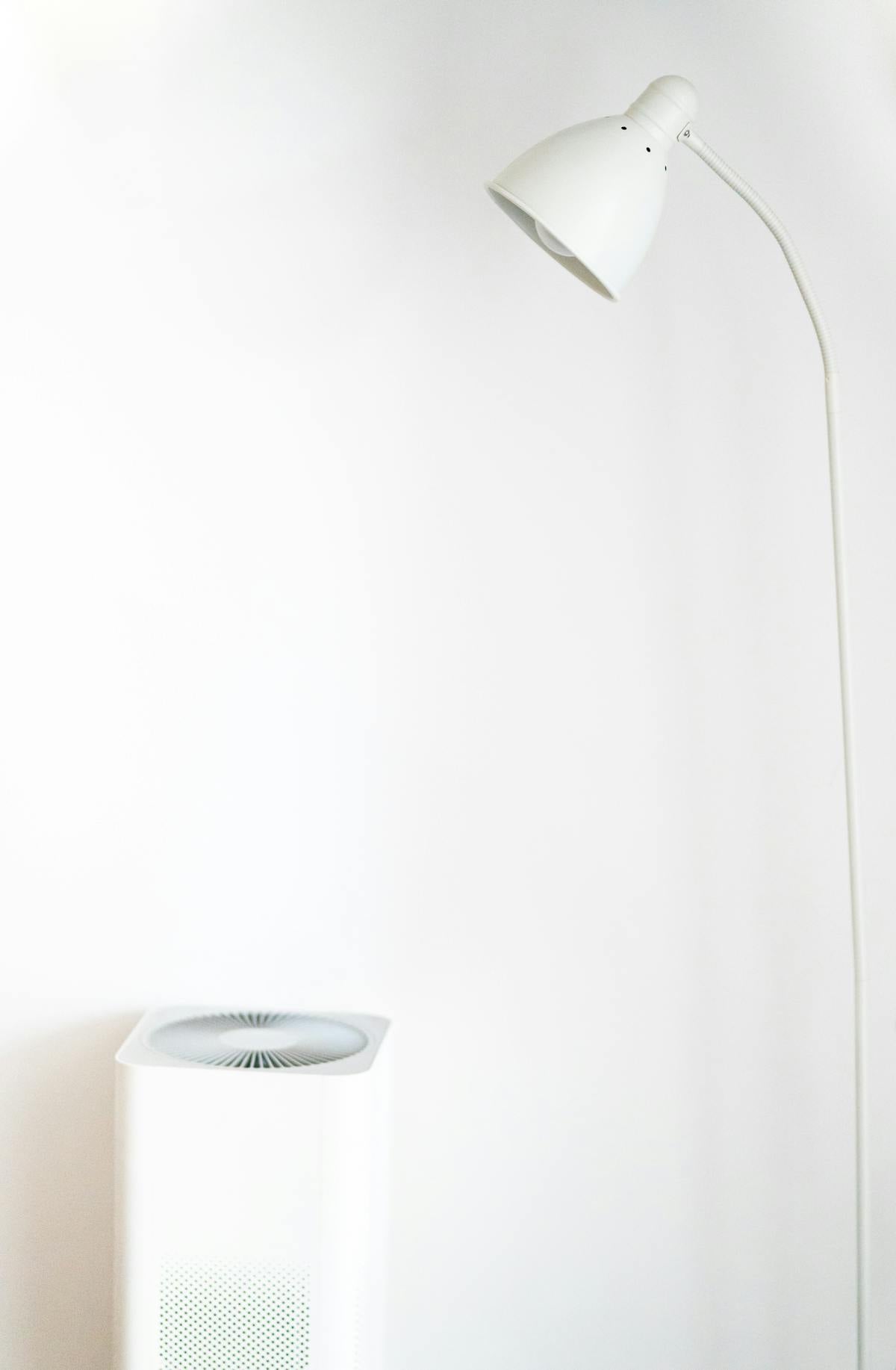
The Coway AP-1512HH Mighty is a four-stage tower-style air purifier from Coway, a South Korean brand that has dominated the home air quality space since the early 2000s. At 16.8 by 18.3 by 9.6 inches and just 12.3 pounds, it is one of the most compact True HEPA purifiers in its class — small enough to tuck between a nightstand and a wall, but powerful enough to clean a 361 sq ft room on paper.
Its market position has been unusual. The Mighty launched at an MSRP of $229, but Coway runs aggressive sales that frequently bring it down to $100 to $130 on Amazon, with a typical street price of $169 to $199. For years it held the top spot in Wirecutter's air purifier guide, and aggregated Reddit reviews show 86 percent positive sentiment with more than 100 upvotes across home and allergy subreddits — making it the single most-recommended air purifier in those communities. In a category cluttered with overpriced "smart" purifiers and gimmicky ionizers, the Mighty has survived because it does the basics extremely well at a price that does not punish you.
Specs at a Glance
| Spec | Value |
|---|---|
| Filtration | 4-stage: pre-filter, activated carbon, True HEPA, Vital Ion |
| HEPA rating | 99.97% of particles greater than or equal to 0.3 microns |
| Coverage (manufacturer) | 361 sq ft |
| Coverage (5 ACH from CADR) | 247 sq ft |
| Noise range | 36.8 dB (low) to 58 dB (high) |
| Dimensions | 16.8 x 18.3 x 9.6 in |
| Weight | 12.3 lbs |
| Modes | Auto, Eco, Manual (3 fan speeds), Sleep |
| Timer | 1 / 4 / 8 hours |
| Air quality indicator | Real-time color LED (blue to purple) |
| Filter indicator | Yes |
| Energy use | ENERGY STAR certified, ~$30 to $40/yr running continuously |
| Connectivity | None (base model) |
| Price | ~$100 to $130 on sale, ~$169 to $199 typical |
Performance: How It Actually Works
Filtration Efficiency and Real-World Coverage
The Mighty's headline number is the 361 sq ft coverage figure that Coway prints on the box. This is honest enough, but it represents a single air change per hour (1 ACH) — the bare minimum for filtration to do anything useful. Allergy and asthma specialists generally recommend at least 4 to 5 ACH for a purifier to keep up with new particles entering a room from open doors, HVAC, and human activity. When you redo the math at the 5 ACH benchmark that CADR testing uses, the practical coverage drops to roughly 247 sq ft.
That is not a flaw — it is just the difference between marketing and reality. In a 200 sq ft bedroom or a 220 sq ft home office, the Mighty has plenty of headroom to scrub the air four to five times per hour on medium fan speed. In a 350 sq ft open-plan living room, it will still work, but you will need to run it on high more often, and the air quality indicator will take longer to settle from purple back to blue. Owners report that pairing two Mighty units in a larger space is more effective than buying a single bigger purifier — and often cheaper.
The filtration stack itself is conventional in a good way. A washable pre-filter catches hair and large dust. An activated carbon deodorization layer handles light odors and VOCs. The True HEPA filter is the workhorse: independent testing and Coway's own specs confirm 99.97 percent capture of particles 0.3 microns and larger, which covers pollen, pet dander, dust mite debris, mold spores, and the vast majority of bacteria. Wildfire smoke particles down to 0.1 microns are mostly captured too, though the carbon layer struggles with the gaseous component of smoke (more on that shortly). For a deeper dive into purifier selection during fire season, see our wildfire smoke purifier guide.
Noise Levels and the Vibration Issue
Coway rates the Mighty at 36.8 dB on its lowest fan setting — quieter than a library whisper and barely audible from across a room. On medium fan speed, owners report a steady, white-noise hum in the low 40s dB range that most people find easy to sleep through. On high, the number climbs to 58 dB, which is roughly the volume of a normal conversation. That is where the complaints start.
The high-speed mode is genuinely loud. Reddit threads about the Mighty are full of users who set the unit to auto mode before bed, then get jolted awake when a pet enters the room and triggers the air quality sensor into kicking the fan up to maximum. The workaround most owners settle on is to run the purifier in manual sleep mode at night, accepting a slight drop in air changes per hour in exchange for guaranteed quiet.
There is a second, less-discussed noise issue: vibration. On high speed, the Mighty's housing can buzz or rattle if it is sitting on a hard, resonant surface like a wooden floor or a thin shelf. The fix is simple — place it on a rug, a felt pad, or a thicker piece of furniture — but it is worth knowing before you set it up. A unit that hums quietly on carpet can be noticeably louder on hardwood, and several owners initially assume their purifier is defective when the real problem is the floor underneath it.
The Vital Ion (Ionizer) Question
The fourth filtration stage is where the Mighty gets controversial. Coway calls it "Vital Ion," and it is an electrostatic ionizer that releases negatively charged ions into the room. The marketing claim is that these ions cling to airborne particles, making them heavier and easier for the HEPA filter to capture. In practice, the effect is modest at best, and the trade-off is meaningful.
Ionizers are known to produce trace amounts of ozone as a byproduct. The Mighty's ozone output is below California Air Resources Board (CARB) limits — the unit is CARB-certified for sale in California, which has the strictest indoor ozone standard in the United States — so it is not dangerous in any practical sense. But ozone is a respiratory irritant even at low levels, and the entire reason most people buy an air purifier is to reduce respiratory irritation, not add a different source of it. Research suggests that for people with asthma, COPD, or chemical sensitivities, the marginal filtration benefit from an ionizer rarely justifies the trade-off.
The good news is that the Vital Ion feature is optional and easy to disable. There is a dedicated button on the top panel labeled "Ionizer," and pressing it toggles the function off; the setting persists through power cycles. The overwhelming consensus on Reddit, in air quality forums, and from several testing labs is the same: turn it off, leave it off, and let the HEPA filter do the work it was designed to do. The Mighty is an excellent HEPA purifier with the ionizer disabled, and arguably a slightly worse one with it enabled.
Ease of Use and Maintenance
The control panel is dead simple — five buttons across the top for power, fan speed, mode, timer, and ionizer, plus an air quality indicator that glows blue, green, purple, or red depending on real-time particulate readings. Auto mode adjusts the fan speed automatically based on that sensor; Eco mode shuts the fan off entirely when the air has been clean for 30 minutes and ramps back up when it detects new particles. Both modes work well in practice, though Eco mode can produce abrupt fan starts that some sleepers find disruptive.
Filter maintenance is straightforward but not free. The pre-filter is washable and should be vacuumed every two weeks. The activated carbon filter needs replacement roughly every 6 months, and the True HEPA filter every 12 months under normal use — a combined cost of about $20 to $40 per year for OEM filters. The Mighty's filter indicator light tracks usage hours and alerts you when replacement is due, which is more reliable than a fixed time interval. Generic third-party filters exist for less money, but several reviewers have flagged inconsistent fit and reduced airflow with off-brand replacements, so the savings are not always worth it.
One legitimate strength: long-term durability. Reddit threads about the Mighty include users on their fifth, sixth, and even seventh year of continuous operation with no mechanical failures — just routine filter changes. For a $130 to $200 appliance, that kind of lifespan changes the value calculation significantly.
Pros and Cons
Pros
- True HEPA filtration captures 99.97 percent of particles 0.3 microns and larger, including pollen, dander, dust, and most smoke
- Compact footprint fits easily in bedrooms, offices, and nurseries
- Quiet on low and medium fan speeds (36.8 to ~45 dB)
- ENERGY STAR certified with very low running cost (~$30 to $40/yr continuous)
- Auto mode and real-time air quality indicator make it genuinely set-and-forget
- Excellent long-term durability — owners commonly report 5+ years of use
- Frequently on sale for $100 to $130, undercutting most competitors
- CARB-certified and safe for sale in California
Cons
- High fan speed is loud (58 dB) and can vibrate on hard surfaces
- Carbon filter layer is thin — struggles with strong cooking odors, smoke, and pet smells
- Vital Ion ionizer produces trace ozone and most experts recommend turning it off
- No WiFi, app control, or voice assistant integration on the base model
- Coverage drops from 361 sq ft (marketing) to ~247 sq ft (at recommended 5 ACH)
- Replacement filter costs add up over the lifetime of the unit
Who Should Buy the Coway AP-1512HH Mighty?
The Mighty is the right purifier for the largest group of buyers: anyone who needs HEPA filtration in a bedroom, home office, nursery, or smaller living room and does not want to overspend on features they will not use. If your room is between 150 and 250 sq ft, the Mighty will deliver 4 to 5 air changes per hour on auto mode without breaking a sweat, and the running cost is low enough that you can leave it on 24/7. Owners with seasonal allergies, mild asthma, or a shedding pet are the sweet spot — this is the unit that consistently shows up in allergist recommendations and aggregated Reddit reviews.
The decision between the base AP-1512HH and the WiFi-enabled AP-1512HHS comes down to one question: do you actually want to control the purifier from your phone? The HHS version costs roughly $20 to $50 more and adds app control, scheduling, and remote monitoring. If you travel often, run multiple purifiers, or want to integrate with a smart home routine, the HHS is worth the upgrade. If you plan to set the purifier on auto mode and never touch it again, the base model is the better value — same filtration, same fan, same air quality sensor. You can read more about our overall approach to indoor air quality on our homepage or browse our indoor air quality monitor guide if you want to pair the purifier with a standalone AQI reader.
There are two scenarios where a different purifier is the smarter buy. If your main concern is strong odors — heavy cooking, smoke, multiple pets, or VOCs — the Winix 5500-2 is a better fit. It uses a washable, larger activated carbon filter that outperforms the Mighty's thinner carbon layer for gaseous pollutants. The Winix costs about the same and covers a slightly larger area, with the trade-off being a less elegant air quality sensor. If your room is smaller (under 200 sq ft), your budget is tight, or you specifically want the quietest possible bedroom purifier, the Levoit Core 300 is the alternative — roughly $99, more compact than the Mighty, and noticeably quieter on its lowest setting, at the cost of less coverage and no auto mode.
Frequently Asked Questions
Should I turn off the Vital Ion feature on the Coway AP-1512HH?
Yes, most experts and long-term owners recommend turning it off. The ionizer produces trace amounts of ozone — below CARB limits but still a respiratory irritant — and the marginal filtration benefit is small compared to what the True HEPA filter already does. There is a dedicated button on the top of the unit to disable it, and the setting persists when you unplug the purifier.
How often do I need to replace the filters?
The washable pre-filter should be vacuumed or rinsed every 2 weeks. The activated carbon filter needs replacement roughly every 6 months, and the True HEPA filter every 12 months under normal use. The Mighty has a filter indicator light that tracks actual runtime hours and alerts you when replacement is due, which is more accurate than a fixed schedule. Expect to spend about $20 to $40 per year on OEM replacement filters.
Is the Coway Mighty quiet enough for a bedroom?
On low and sleep modes (around 36.8 to 45 dB), yes — most users find it produces a steady, unobtrusive white noise that helps rather than hurts sleep. On high (58 dB), it is too loud for comfortable sleep. The common workaround is to run it in manual sleep mode overnight instead of auto mode, which prevents the fan from spinning up unexpectedly if the air quality sensor detects a brief spike.
What is the actual coverage area — 361 sq ft or 247 sq ft?
Both are correct, but they measure different things. The 361 sq ft figure is based on 1 air change per hour (1 ACH), which is the manufacturer's minimum. The 247 sq ft figure is based on 5 ACH, which is what allergy and asthma specialists actually recommend for meaningful filtration. For a bedroom or office, plan around the 247 sq ft number, not the box number.
Should I buy the base AP-1512HH or the WiFi AP-1512HHS?
The HHS version adds app control, scheduling, and smart home integration for roughly $20 to $50 more. The filtration, fan, and sensor are identical. If you will actually use the app — for scheduling, remote monitoring, or smart home routines — the upgrade is worth it. If you plan to set it on auto and forget it, the base model is the better value.
How does the Coway Mighty compare to the Levoit Core 300 and Winix 5500-2?
The Mighty is the all-rounder: best for 200 to 250 sq ft rooms, balanced filtration, proven reliability. The Levoit Core 300 is smaller, quieter, and cheaper but covers less area and lacks an auto mode — a good pick for small bedrooms under 200 sq ft. The Winix 5500-2 has a larger, washable activated carbon filter and is the better choice for strong odors like cooking, smoke, or pets. For most buyers, the Mighty wins on overall balance, but the right answer depends on your specific room and air quality issues.
Shop these picks
Related guides