Hatch Restore 3 Review 2026: Worth the Subscription?
Hatch Restore 3 Review (2026): Worth the Money?
If your phone is the first thing you touch in the morning and the last thing you put down at night, the Hatch Restore 3 is built to fix that. It is a sunrise alarm clock, sound machine, and dimmable bedside lamp combined into a single screen-free device that — for the first time in the Restore line — has real physical buttons. The bottom-line verdict: it is the best sunrise alarm on the market for the right buyer, and an overpriced, paywalled disappointment for the wrong one.
Quick verdict: Buy the Hatch Restore 3 if you want a polished, phone-free wake-up routine and you can stomach a $50/year subscription for the full feature set. Skip it if you just need a basic alarm clock or you resent paying monthly fees for hardware you already own.
What Is the Hatch Restore 3?
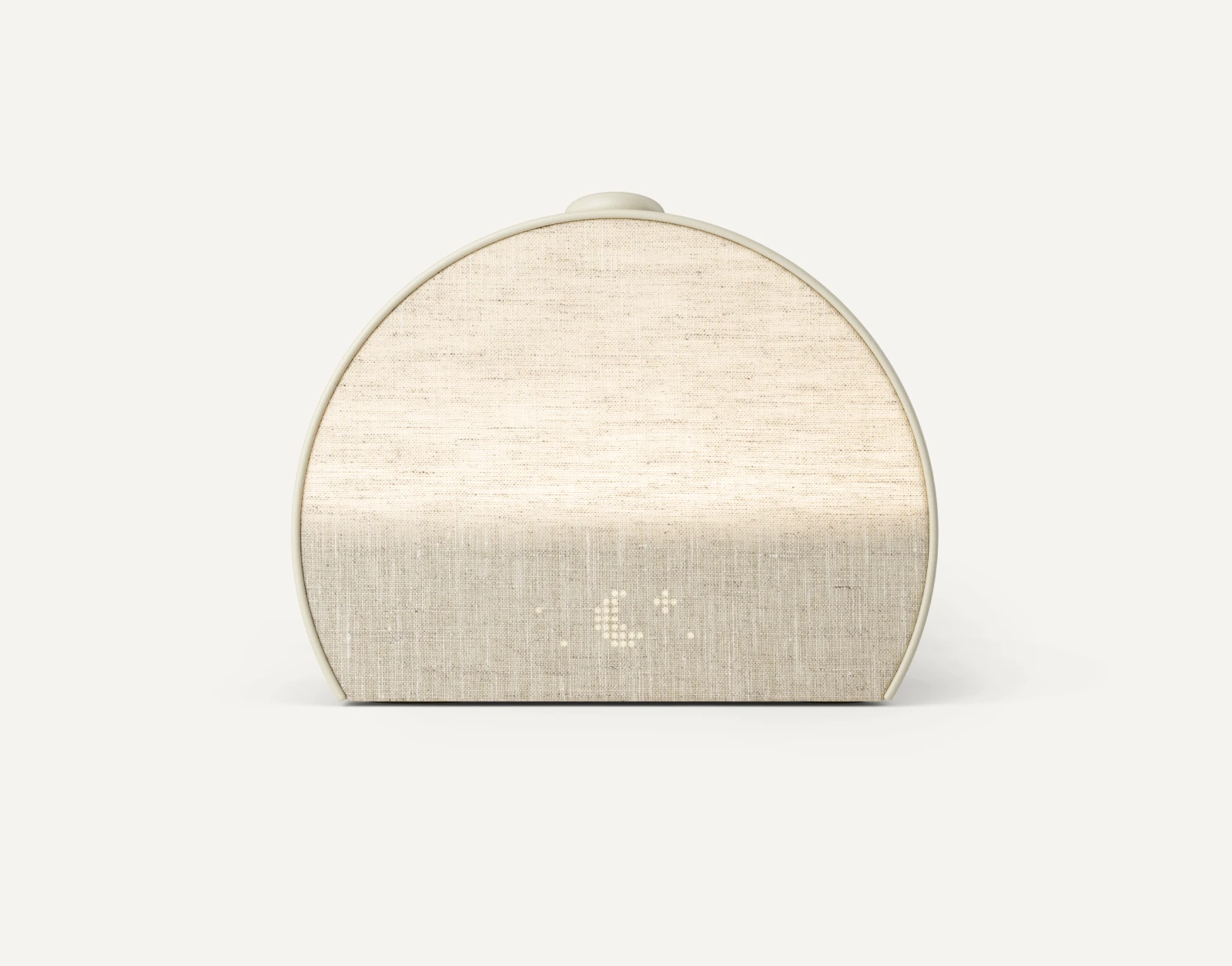
The Hatch Restore 3 is the third generation of Hatch's bestselling sunrise alarm clock line, sitting at a retail price of $169.99 (typically around $144.99 on Amazon, dropping to roughly $139.99 on Prime Day). It combines three devices into one curved, fabric-wrapped puck: a sunrise alarm that gradually brightens over your chosen wake window, a high-quality sound machine with more than 50 sleep sounds, and a smart dimmable bedside lamp that doubles as a reading light or nightlight.
What makes the Restore 3 different from a generic sunrise alarm is the design philosophy. There is no display. There is no clock face. The only physical control on top is a single oversized "Big Button" that handles snooze, volume, and nightlight toggling. The intent is unsubtle: Hatch wants the device on your bedside table instead of your phone, and it has stripped the product down to enforce that. Color options are Putty, Greige, and Cocoa — all neutral, all designed to disappear into a bedroom rather than scream "gadget."
Hatch's market position is firmly premium. Basic sunrise alarms from brands like Philips or Lumie cost $30 to $80 and do the gradual-light wake-up well enough. The Restore 3 charges roughly double, then asks for $4.99/month for the full sound and content library. That extra cost has to be justified by something — and for the most part, it is.
Specs at a Glance
| Spec | Value |
|---|---|
| Functions | Sunrise alarm + sound machine + dimmable bedside lamp |
| Light colors (no subscription) | 18 |
| Sleep sounds (no subscription) | 50+ |
| Unwind content (no subscription) | 4 sampler options |
| Physical controls | Big Button (snooze, volume, nightlight) |
| Display | None (intentional) |
| Connectivity | Wi-Fi, controlled via Hatch app (iOS/Android) |
| Subscription | Hatch+ at $4.99/month or $49.99/year (30-day free trial) |
| Color options | Putty, Greige, Cocoa |
| Amazon ASIN | B0DLLSCVZW |
| Price | ~$170 retail, ~$145 on Amazon |
Performance: How It Actually Works
Sunrise Alarm and Light Quality
The sunrise alarm is the headline feature, and it is genuinely well executed. You set a wake time in the Hatch app, choose a sunrise duration (typically 15 to 30 minutes), pick a light color and intensity, and the device gradually fades the bedroom from black to a warm peach-amber over your chosen window. Research suggests that gradual light exposure during the final stage of sleep prompts a more natural cortisol rise than a sudden alarm, which in turn reduces the groggy feeling — sleep inertia — most people experience after a jarring wake-up.
In practical use, the difference is real but not magical. You will still feel tired if you slept five hours. But on a normal 7-to-8-hour night, the Restore 3 wakes you in a noticeably gentler state than a phone alarm. The light is bright enough at maximum to function as a sunrise even with light-blocking curtains, and the warm color temperature avoids the harsh blue-white that makes cheaper sunrise alarms feel clinical. The 18 included light colors are more than enough — chasing the full library behind the paywall is unnecessary for the wake-up function.
The lamp doubles as a reading light, and here it is competent rather than excellent. At full brightness it is roughly equivalent to a low-wattage bedside bulb — fine for reading a few pages, not a substitute for a dedicated lamp if you read in bed for an hour. As a nightlight at minimum brightness, however, it is exactly right: warm enough to find the bathroom without resetting your circadian rhythm.
Sound Machine Quality
The sound machine side of the Restore 3 punches above what you would expect from a multi-function device. The included sounds — white, pink, and brown noise plus rain, ocean, fan loops, and a handful of nature tracks — are recorded at higher fidelity than the loop-and-hiss audio common to budget sound machines. For most sleepers, the 50+ sounds available without a subscription are genuinely sufficient.
Speaker quality is where Hatch quietly justifies part of the premium. The driver is large enough to produce real bass on brown noise tracks, which matters because tinny brown noise (the dominant frequency for sleep-onset masking) is the most common failure mode of cheap sound machines. Side-by-side with a $30 LectroFan, the Restore 3 sounds clearly fuller and more relaxing. Side-by-side with a dedicated $150 sound machine, the gap closes — but the Restore 3 also gives you an alarm and a lamp, so the value calculation favors it.
The Hatch+ subscription unlocks hundreds more sounds, sleep stories, guided meditations, and "Unwind" wind-down routines. Whether you need any of that is the real question, and the honest answer is: probably not, unless you actively want guided sleep content. The base library is plenty for the people who treat sound as background masking. The subscription is for people who want their bedside device to also be a Calm or Headspace replacement.
App and Phone-Free Controls
This is where the Restore 3 gets polarizing. The Big Button is the single biggest reason to choose this generation over the Restore 2. One press snoozes the alarm. Press and hold to dim or brighten the nightlight. Double-tap to toggle the sound machine. It is the first Hatch device that genuinely lets you operate it without unlocking your phone, which is the entire point — the device is supposed to displace the phone-as-bedside-companion habit.
The Hatch app, on the other hand, is the product's biggest weakness. Reddit threads describing it as "the worst UI ever" are not far off. The app is cluttered, leans heavily on upselling Hatch+ content even after subscription, and routinely buries simple settings (like adjusting alarm volume) under multiple taps. Setting up your first sleep routine takes ten minutes longer than it should because the app insists on walking you through marketing flows for premium content first.
Wi-Fi connectivity is mostly reliable but not bulletproof. A notable minority of Reddit users report the device dropping off the network after router restarts or firmware updates, requiring a re-pairing flow that — given the app's UI — is more painful than it should be. If you live somewhere with flaky Wi-Fi, factor this in.
Pros and Cons
Pros
- Genuinely effective gradual sunrise alarm with warm, non-clinical light
- High-quality speaker and a strong base library of 50+ sounds without subscription
- The Big Button is a real, useful improvement — phone-free control finally works
- Screen-free design eliminates a blue-light source from the bedroom
- Three understated colorways (Putty, Greige, Cocoa) that fit any decor
- 30-day Hatch+ free trial lets you test the full content library before paying
Cons
- $170 retail is steep when basic sunrise alarms cost $30 to $80
- The Hatch app is cluttered, upsell-heavy, and frequently criticized
- Hatch+ at $4.99/month or $49.99/year locks the deepest content library behind a paywall
- No display means you cannot glance at the time at night (intentional, but polarizing)
- Wi-Fi connectivity issues reported by a minority of users
- Marginal upgrade over the Restore 2 unless you specifically want the Big Button
The Subscription Question: Is Hatch+ Worth It?
Hatch+ costs $49.99 per year, which works out to roughly $4 per month — slightly cheaper than the basic Netflix tier and roughly the same as a single coffee. Framed that way, it is not unreasonable. Framed as "I just paid $170 for hardware and now I have to pay more to use it fully," it stings.
The honest answer: the device is genuinely usable and worthwhile without the subscription. The 18 included light colors, 50+ sleep sounds, and 4 Unwind sampler options cover the core wake-up and sound-masking use cases. You do not need Hatch+ to use the alarm, the lamp, or the basic sound machine.
Hatch+ becomes worth it if — and only if — you actively want guided sleep content. Sleep stories for adults, meditation libraries, expanded soundscapes, and structured wind-down routines are the upsell. If you would otherwise pay for a Calm or Headspace subscription, replacing one of those with Hatch+ is a clear win. If you would not, save the $50.
Who Should Buy the Hatch Restore 3?
The ideal buyer is someone who already knows their phone is wrecking their sleep and wants a hardware-first solution to the problem. People who grab their phone first thing in the morning, doom-scroll in bed at night, or sleep with the phone on the nightstand "just for the alarm" are exactly the audience this device is designed for. The Big Button and screen-free design are not gimmicks — they are behavioral nudges, and they work. If you are in the middle of building a restful bedroom and trying to make it a phone-free zone, the Restore 3 belongs on the bedside table.
This is also a good fit for couples where one partner needs a sound machine and the other needs a sunrise alarm — the Restore 3 handles both without cluttering the nightstand with two devices. People with seasonal affective patterns, shift workers, and anyone whose natural wake time is later than their alarm time will get particular benefit from the gradual light wake-up.
The Hatch Restore 3 is the wrong product for several types of buyer, and we will be direct about it. If you just want a basic alarm clock, buy a $25 alarm clock. If you are budget-conscious, a $40 Philips sunrise alarm gives you 80% of the wake-up experience for less than a quarter of the total cost. If you are subscription-averse — even $50/year — the Hatch+ upsell will frustrate you forever, and you should look at one-time-purchase competitors instead. And if you currently own the Restore 2 and are happy with it, the upgrade is genuinely marginal: the Big Button is the only meaningful new feature.
Frequently Asked Questions
Is the Hatch Restore 3 worth upgrading from the Restore 2?
For most existing Restore 2 owners, no. The core sunrise alarm, sound machine, and lamp functions are essentially identical between generations. The only meaningful new feature is the Big Button on top, which adds genuine phone-free control. If the lack of physical buttons frustrates you on the Restore 2, the upgrade is worth it. If not, save your money — the underlying experience has not changed enough to justify another $170.
Do you have to pay for the Hatch+ subscription to use the Restore 3?
No. The device is fully functional without Hatch+. You get 18 light colors, 50+ sleep sounds, and 4 Unwind sampler options for free, plus the alarm, lamp, and sound machine work exactly as advertised. The subscription unlocks the deeper library of sleep stories, meditations, and additional sounds — useful if you want guided content, unnecessary if you do not. A 30-day free trial is included so you can test the full library before deciding.
Why does the Hatch Restore 3 have no display?
The screen-free design is intentional. Research suggests that checking the time during the night — particularly on a bright display — disrupts sleep onset and can extend awakenings. Hatch removed the display deliberately to eliminate that temptation. It is polarizing: some users love the cleaner aesthetic and reduced light pollution, while others find it genuinely frustrating not to be able to glance at the time at 3 a.m. Know which camp you fall into before buying.
Does it work as a regular bedside lamp?
Yes, but with caveats. As a soft reading light or warm nightlight it is excellent — the dimming is smooth and the color temperature is genuinely pleasant. As a primary task lamp for reading a full book in bed, it is underpowered compared to a dedicated bedside lamp. Treat it as a supplemental light, not a replacement for proper bedroom lighting when optimizing your sleep environment.
Are there Wi-Fi or app issues to know about?
A minority of users report intermittent Wi-Fi drops and the Hatch app is widely criticized as cluttered and upsell-heavy. For most users the device pairs once and works reliably for months. For users with flaky home networks, the re-pairing process can be frustrating because of the app's UI. If reliable connectivity is critical, this is a real consideration — though it is not a dealbreaker for the average buyer.
Can the Hatch Restore 3 replace a meditation app like Calm or Headspace?
With the Hatch+ subscription, partially yes. The library includes guided meditations, sleep stories, and structured wind-down routines that overlap meaningfully with what Calm and Headspace offer for sleep-specific content. It is not as deep as a dedicated meditation app for daytime mindfulness or therapy-adjacent content, but for bedside use specifically, Hatch+ at $49.99/year is competitive with or cheaper than the alternatives. Replacing a $70/year Calm subscription with Hatch+ is reasonable; adding Hatch+ on top of an existing meditation subscription is harder to justify.
Shop these picks
Related guides