Cool Bedroom for Better Sleep: 8 Steps Without AC
Cool Bedroom for Better Sleep: 8 Steps Without AC That Actually Work
A hot bedroom is one of the most common — and most fixable — reasons people lie awake at 2am drenched in sweat. The problem usually isn't a lack of willpower or the wrong pajamas; it's that the room itself is fighting your body's natural drop in core temperature. This guide walks through eight steps, starting with free fixes that most people skip and ending with the tech that's actually worth the money if nothing else works.
Why a Hot Bedroom Wrecks Sleep More Than You Think
Sleep scientists generally agree the ideal bedroom temperature sits between 60 and 67°F, with sleep specialist Dr. Michael Breus pinpointing 65°F as the sweet spot for most adults. The reason is biological: as bedtime approaches, your body begins shedding heat through the hands, feet, and face to lower its core temperature, which is what triggers the release of melatonin and the onset of deep sleep. When the room is too warm, that process stalls. You toss, you sweat, and you cycle through lighter stages of sleep instead of dropping into the restorative phases.
Most people try to solve the problem at night — fan on, window cracked, blanket kicked off. But research suggests the heat that ruins your sleep at 3am actually arrived in your room around 2pm, when the afternoon sun was baking through the windows. Studies indicate windows can let in roughly 25% of summer heat, and that heat gets trapped in walls, mattresses, and floors long after sundown. So if you're only fighting the temperature once you're already in bed, you're losing the battle by hours.
There's also a second, sneakier villain: humidity. A 68°F room with 70% humidity feels swampier than a 75°F room at 30%, because moist air prevents sweat from evaporating off your skin. Many people who think they need a colder bedroom actually need a drier one. We'll address both throughout this guide.
Step 1: Block the Heat Before It Enters (Daytime Prep)
The single highest-impact free fix is closing your blinds, curtains, or shades during the hottest part of the day — roughly 10am to 6pm in most climates. This is especially critical for any window that gets direct afternoon sun. Blackout or thermal-lined curtains amplify the effect by reflecting infrared radiation back outside before it heats the glass and re-radiates into the room.
If you work from home or have a flexible schedule, treat this like a morning ritual: open the windows wide before sunrise to flush out trapped heat, then close everything tight by mid-morning. The goal is to keep the cool overnight air locked in for as long as possible. Apartments and rentals benefit enormously from this trick because they often have only one or two windows and rely on thermal mass (walls, furniture, mattress) to stay cool.
Common pitfall: people close the curtains but leave the windows themselves open during a hot afternoon, which defeats the entire purpose. Hot outdoor air will still convect in. Seal the room during peak heat, then reopen everything once outdoor temps drop below indoor temps in the evening.
For a deeper breakdown of how window treatments affect sleep, see our sleep environment guides — blackout curtains do more than just block light.
Step 2: Master Cross-Ventilation With Strategic Fan Placement
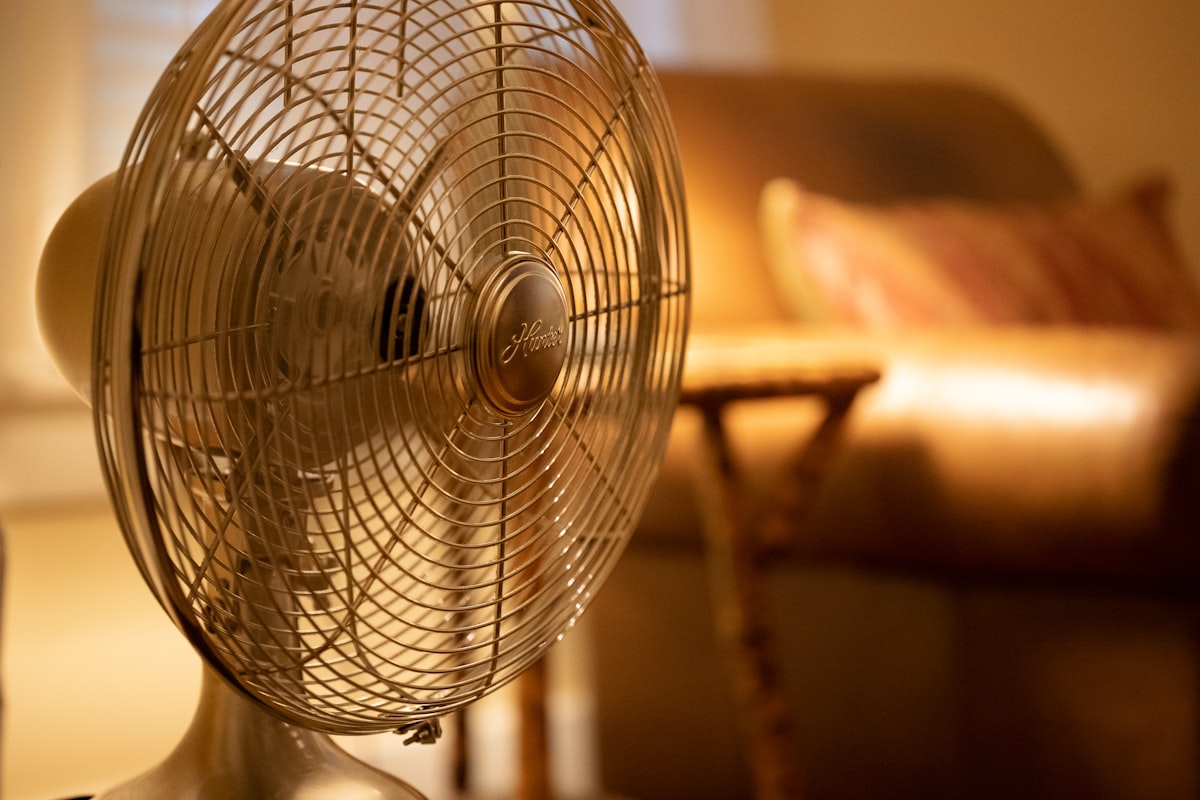
A single fan pointed at your face is fine, but it's not actually cooling the room — it's just moving the same warm air over your skin faster. To genuinely lower the temperature, you need to push hot air out and pull cooler air in. This is called cross-ventilation, and it requires two openings and a little geometry.
Place a box fan or window fan in the window facing outward on the warmer side of your home (usually west or south after a hot day). Open a second window on the opposite, cooler side of the home — no fan needed there, or a smaller fan pointing inward. The exhaust fan creates negative pressure that sucks cooler outside air through the second window and across the room. Within 20–30 minutes, you'll feel a noticeable drop, especially after sunset when outdoor air is finally cooler than indoor air.
A Reddit-favorite hack for nights when outdoor air isn't much cooler: place a shallow bowl or tray of ice cubes in front of an oscillating fan. As the ice melts, the fan blows air over it and creates a makeshift evaporative cooler. It's not air conditioning, but it can drop the perceived temperature in a small bedroom by several degrees for a couple of hours — long enough to fall asleep.
Recommended tool: A quality 20-inch box fan (~$25) is the unsung hero of bedroom cooling. Position one in the window and one inside the room for maximum effect.
Step 3: Tackle Humidity Separately From Temperature
This is the step most cooling guides skip entirely, and it's why so many people are mystified when their thermostat reads 67°F but they're still sweating. If the relative humidity in your bedroom is above 55–60%, your sweat can't evaporate, and your body can't shed heat efficiently. Lowering humidity makes the room feel several degrees cooler without changing the actual temperature.
A small bedroom dehumidifier (around $150–$250 for a 30–35 pint unit) is one of the most underrated sleep upgrades you can buy. Run it during the day with the door closed, empty the tank before bed, and you'll often find the room feels crisp and light instead of heavy and tropical. Aim for a relative humidity reading between 40% and 50% — comfortable for sleep without drying out your sinuses.
Bonus benefit: dehumidifiers also discourage dust mites and mold, both of which spike in humid bedrooms and can quietly worsen allergies, sinus congestion, and disrupted breathing during sleep. If you've ever woken up congested in a humid room, this single fix can be life-changing.
Step 4: Switch to Breathable Bedding (and Ditch the Heavy Duvet)
Bedding traps body heat far more than most people realize. A polyester-blend sheet set on a memory foam mattress is essentially a thermos around your torso. The fix is twofold: switch to natural, moisture-wicking fibers, and rotate weight seasonally.
Look for cotton percale, Tencel (lyocell), or bamboo-rayon sheets in the 200–400 thread-count range. These fabrics wick sweat away from the skin and let it evaporate, which is the same mechanism your body uses to cool itself. Avoid sateen weaves and high-thread-count cotton (above 600) in summer — they're soft, but they trap heat. A quality cooling sheet set runs around $40 to $120 and is the cheapest sleep upgrade with the biggest return.
A note of caution: "cooling bamboo sheets" are heavily marketed and some lab tests have found their cooling claims overstated. Real-world relief comes from the weave and weight, not the brand-name buzzword. Light percale cotton at 250 thread count often outperforms a more expensive "cooling" sateen.
For the duvet, switch to a lightweight summer-weight comforter or a simple cotton coverlet. Many people resist this because they psychologically need the weight of a blanket to fall asleep — in which case, try a breathable cotton-filled weighted blanket designed for warm weather, or simply use a folded sheet for the weight without the heat.
Step 5: Cool Your Body Before You Get Into Bed
Room temperature only matters because of what it does to your body. You can shortcut the entire problem by directly lowering your core temperature in the 30–60 minutes before bed.
The most effective method is counterintuitive: take a warm shower (not cold) about an hour before bed. The warm water dilates blood vessels in your skin, which causes your body to dump heat rapidly once you step out — a process that mimics the natural pre-sleep temperature drop. Studies indicate this can shorten the time it takes to fall asleep by roughly 10 minutes on average.
If you prefer a cold approach, run cold water over your wrists, forearms, and the back of your neck for 60–90 seconds right before bed. These areas have blood vessels close to the surface and cool the rest of your body quickly. Some people also find a cold pack tucked behind the knees or under the feet helps trigger sleep onset on stubbornly hot nights.
Hydration matters too. A glass of cool water before bed helps your body sweat efficiently if it needs to. Just don't overdo it — you don't want a 4am bathroom trip undoing your hard work.
Step 6: Raise the Bed and Rethink the Mattress
Heat radiates upward from the floor, especially in upstairs bedrooms above warm garages, kitchens, or sunbaked concrete slabs. Raising your bed off the ground — even a few inches via taller risers or a slatted frame — improves airflow underneath and reduces the heat soaking up into your mattress.
Then there's the mattress itself. Memory foam sleeps hot. Gel-infused or "cooling" foam helps marginally, but a full memory foam mattress will always run warmer than a hybrid (springs + foam) or a latex mattress, because foam is essentially insulation wrapped around your body. If your bed is the main heat source and replacing it isn't in the cards, a cooling mattress topper is the next best move.
Recommended product: A Tencel or wool mattress topper (~$80–$200) adds a breathable layer between you and a hot mattress. For more advanced cooling, jump to Step 8.
Step 7: Solve the Two-Person Thermostat War
One of the most common — and least talked about — sleep problems is partner mismatch. One person runs hot, the other freezes, and the thermostat becomes a nightly negotiation. Compromise temperatures usually mean both people sleep badly.
The fix is dual-zone climate control at the bed level rather than the room level. The simplest version is free: one partner uses a lightweight sheet while the other adds a heavier blanket on their side. Beyond that, a fan aimed at one side of the bed (or a small clip-on bed fan) gives the hot sleeper personal airflow without turning the cool partner into an icicle.
For households where this is a chronic, marriage-tax-level problem, dual-zone cooling mattress systems are genuinely worth the money. The Chilipad Dock Pro ($499) and Eight Sleep Pod 5 ($2,095) both offer per-side temperature control, so one partner can sleep at 60°F while the other sleeps at 72°F on the same bed. The Perfectly Snug Smart Topper (~$299) is a less expensive air-based alternative that also offers dual zones.
This is one of the few sleep-tech categories where the price genuinely buys you a measurable result. If thermostat conflict is costing you sleep multiple nights a week, the math works out fast.
Step 8: When Free Fixes Aren't Enough — Bed Cooling Systems
If you've worked through Steps 1–7 and you're still overheating, the issue is likely your individual physiology (menopause, certain medications, naturally high metabolic rate) rather than your room. At that point, bed-level cooling technology becomes the most efficient solution because it cools just you, not the whole apartment.
There are two main categories:
- Air-based systems like the BedJet 3 (~$169) blow temperature-controlled air through a hose into your sheets. They're affordable, easy to install on any bed, and let you adjust temperature via remote or app.
- Water-based systems like the Chilipad Dock Pro (
$499) and Eight Sleep Pod 5 ($2,095) circulate cooled water through a thin mattress pad. They're quieter, more precise, and offer dual-zone control, but cost more and require a small bedside reservoir.
For most people, the BedJet 3 is the entry point — it's the cheapest way to test whether bed-level cooling solves your problem. If it does and you want quieter, more refined control, upgrade to a water-based system.
Quick-Reference Checklist
- Close blinds and curtains by 10am on hot days
- Run cross-ventilation: outward-facing window fan plus open opposite window
- Add a dehumidifier; target 40–50% relative humidity
- Switch to cotton percale, Tencel, or bamboo-rayon sheets
- Use a lightweight summer comforter or coverlet
- Take a warm shower 60 minutes before bed
- Cool wrists, neck, and forearms with cold water before lying down
- Raise the bed slightly off the floor for airflow
- Add a breathable mattress topper if your mattress runs hot
- For partner conflict: use a dual-zone cooling pad
- Last resort: invest in a bed-level cooling system
Product Picks That Make This Easier
| Product | Why It Helps | Price |
|---|---|---|
| BedJet 3 | Affordable air-based bed cooling, remote/app control, fits any mattress | ~$169 |
| Perfectly Snug Smart Topper | Dual-zone air-cooled topper at a midrange price | ~$299 |
| Chilipad Dock Pro | Quiet water-cooled pad with precise per-side temperature control | ~$499 |
| Eight Sleep Pod 5 | Premium water-cooled system with health tracking and dual zones | ~$2,095 |
If you're new to active bed-cooling and just want to see whether it changes your sleep, start with the BedJet. If thermostat conflict is the real problem, jump straight to a dual-zone water system. Browse vivavenly's sleep coverage for deeper reviews of each.
Frequently Asked Questions
What's the ideal bedroom temperature for sleep?
Most sleep research points to a range of 60–67°F, with 65°F often cited as the sweet spot. The exact number varies by person — older adults and women in perimenopause may prefer slightly warmer, while hot sleepers and athletes often do better closer to 60°F. The principle stays the same: cool enough to let your core body temperature drop.
Why do I keep waking up sweating at 3am even with a fan on?
A fan moves air but doesn't actually cool it. If outdoor air isn't cooler than indoor air, or if your bedding is trapping heat, the fan just circulates warm air over your skin. Common culprits are memory foam mattresses, heavy duvets, polyester sheets, and high humidity. Try the bowl-of-ice trick (Step 2), switch to breathable bedding (Step 4), and add a dehumidifier (Step 3).
Does humidity matter as much as temperature?
Often more. A 68°F room at 70% humidity feels swampier than a 75°F room at 35%, because high moisture prevents sweat from evaporating. Aim for 40–50% relative humidity for the best sleep environment. A cheap hygrometer (~$15) tells you what you're actually dealing with.
Are cooling bamboo sheets actually cooler?
Sometimes, but the marketing often overpromises. The fiber matters less than the weave and weight — a 250-thread-count cotton percale often outperforms a heavy bamboo sateen. Look for lightweight, loose weaves regardless of fiber, and ignore brand-name "cooling tech" claims unless backed by independent testing.
What if I rent and can't install AC?
Stack the free fixes first: daytime blackout, cross-ventilation with fans, dehumidifier, breathable bedding, and pre-bed body cooling. If you still struggle, a bed-level cooling system like the BedJet 3 needs no installation, works with any mattress, and packs away easily if you move. It's the renter-friendly path to consistent cool sleep.
My partner and I disagree on bedroom temperature — what's the move?
Set the room to the cooler partner's preference, then give the hot sleeper personal cooling — a fan aimed at their side, lighter bedding on their half, or a dual-zone cooling pad like the Chilipad Dock Pro. Trying to find a "compromise" temperature usually means both people sleep poorly. Cool the bed, not the room.
Can a cold shower before bed help?
A warm shower is actually more effective. Warm water dilates blood vessels near the skin, and the rapid heat loss afterward mimics your body's natural pre-sleep cooling. If you prefer cold, run it over your wrists, neck, and forearms for about a minute right before bed — those areas cool your core fastest.
Shop these picks
Related guides