How to Test Your Home Water Quality 2026
How to Test Your Home Water Quality in 2026
You can't see lead, PFAS, or bacteria in your tap water — and your water utility's annual report may not tell the whole story. Whether you're on city water or a private well, knowing exactly what's in your water is the first step toward protecting your household. This guide walks you through every testing method available in 2026, which one fits your situation, and what to do once you have your results. For our full coverage on filtration and removal, see our water filtration guides.
Why Testing Your Water Matters in 2026
Most households assume their tap water is safe because it looks and tastes fine. Research suggests that appearance and taste are poor indicators of water safety — lead, arsenic, PFAS, and coliform bacteria are all colorless, odorless, and flavorless at the concentrations typically found in residential water supplies.
The situation is especially pressing for well water users. If you draw from a private well, no government agency monitors your supply or sends you an annual safety report. The Centers for Disease Control and Prevention recommend that well water be tested at least once a year for coliform bacteria, dissolved solids, nitrates, and pH. Yet studies indicate that a large share of private well owners have never tested their water at all.
Even municipal water can surprise you. Your utility tests water at the treatment plant, but a lot can change between there and your faucet — aging lead service lines, corroded pipes inside older homes, and cross-contamination events all affect the water that actually reaches your glass. In 2026, with PFAS (per- and polyfluoroalkyl substances) now classified as hazardous at very low thresholds by the EPA, comprehensive testing has become more relevant than ever.
Understanding Your Free Starting Point: The CCR
Before buying any test kit, check whether you already have useful data. If you receive municipal water and pay your own bill, your utility is legally required to send you an annual Consumer Confidence Report (CCR) — sometimes called a water quality report. You can also look it up for free on the EPA's website using your zip code.
Reading a CCR can be confusing. The most important columns to check are:
- Lead — the EPA action level is 15 parts per billion (ppb), but health organizations note no safe level exists; anything above zero warrants further investigation
- Nitrates — the limit is 10 mg/L; higher levels are dangerous for infants and pregnant women
- Total Trihalomethanes (TTHMs) — disinfection byproducts; limit is 80 ppb; linked to long-term health effects at elevated exposure
- PFAS — as of 2024, the EPA set maximum contaminant levels (MCLs) for six PFAS compounds; check whether your utility reports them
The CCR is a useful baseline, but it has real limits: it reflects averages across the distribution system, not the water at your specific tap. If your home has older plumbing or you want contaminant-level precision, a home test is the logical next step.
What to Look for: Choosing the Right Test Method
Test Strips — Quick Checks, Limited Accuracy
Test strips are the fastest and cheapest option. You dip a strip into a water sample, wait 30–60 seconds, and compare the resulting color change to a reference chart. Good kits test for 15 or more parameters including chlorine, hardness, pH, nitrates, copper, and iron — all in under two minutes.
The trade-off is accuracy. Test strips are semi-quantitative at best: they tell you whether a contaminant is roughly present or absent, not its precise concentration. More importantly, they cannot reliably detect trace chemicals like lead at low ppb levels, PFAS, arsenic, or organic compounds. Use strips for day-to-day monitoring and quick sanity checks, not as a substitute for comprehensive analysis.
Digital TDS Meters — Filter Performance Monitoring
A TDS (Total Dissolved Solids) meter measures the combined concentration of all dissolved minerals and salts in your water, expressed in parts per million (ppm). They cost $15–$25 and give you an instant reading.
TDS meters are most useful when you already have a filter. If your reverse osmosis system should be producing water below 20 ppm and you suddenly read 80 ppm, the membrane likely needs replacing. For raw untreated water, a high TDS reading signals mineralization or contamination worth investigating, but it doesn't tell you which contaminants are present. TDS meters are a monitoring tool, not a diagnostic one.
Mail-In Lab Kits — The Accurate Answer
For genuine peace of mind about health-relevant contaminants, a certified laboratory test is the only reliable method. You collect a water sample at home using the provided vials and instructions, mail it to an EPA-accredited lab, and receive a full report within 7–10 days.
Costs scale with comprehensiveness:
- Basic test (bacteria + nitrates): $30–$50
- Standard panel (15–20 parameters, includes lead and hardness): $80–$120
- Comprehensive panel (100+ analytes, includes heavy metals, PFAS, organics): $150–$300
- Premium / well water (200+ parameters): $350–$450
For most homeowners on city water with no specific concern, a standard panel covers the practical bases. Well water users and anyone with older plumbing or a known local contamination issue should invest in a comprehensive panel.
How to Test Your Water: Our Top Picks for 2026
| Kit | Best For | Method | Parameters | Price |
|---|---|---|---|---|
| Tap Score Advanced | City water, most homeowners | Lab | 116 | ~$149 |
| WaterCheck Deluxe | Well water near agriculture | Lab | 83 | ~$140 |
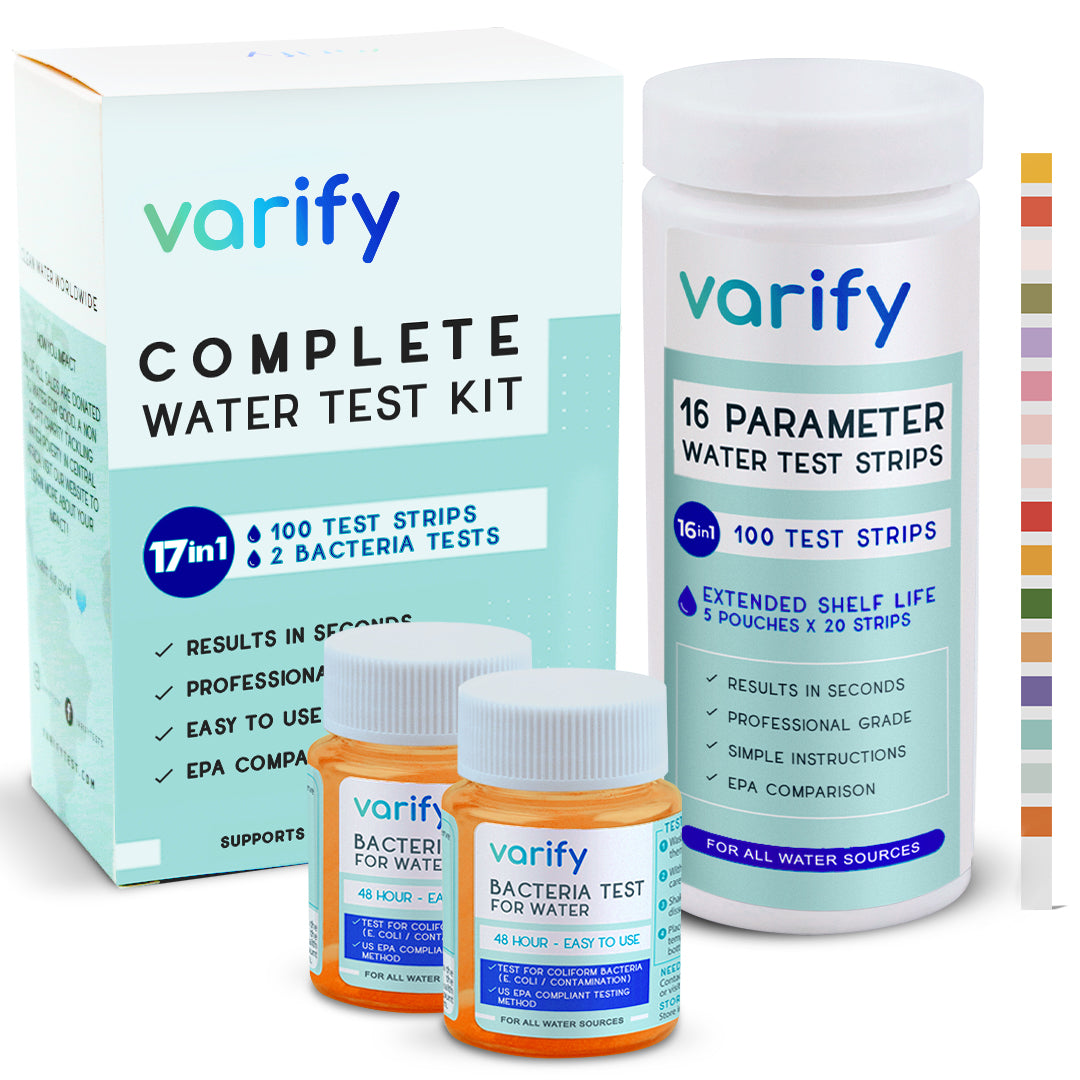
| VARIFY Premium | Budget / quick screen | Strips | 17 | ~$27 |
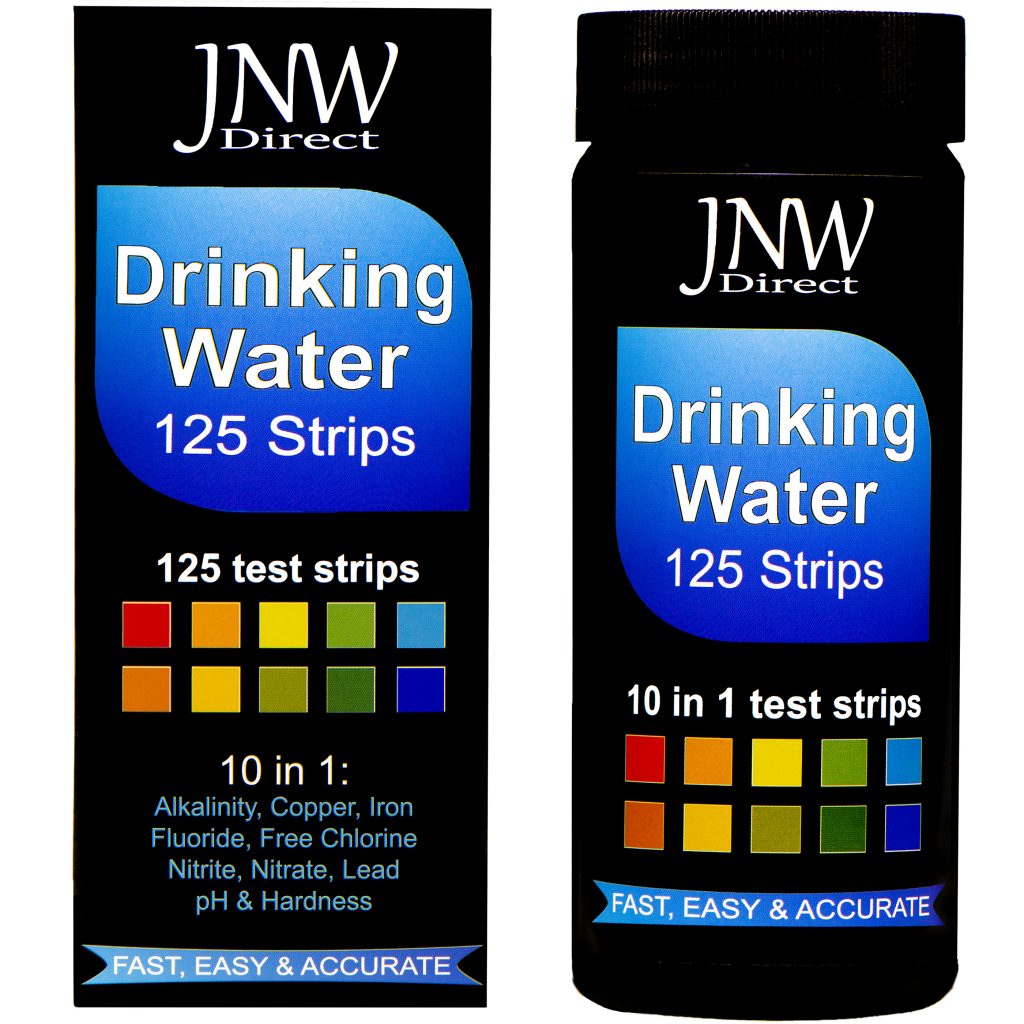
| JNW Direct 100-Strip | Daily filter monitoring | Strips | 15 | ~$15 |
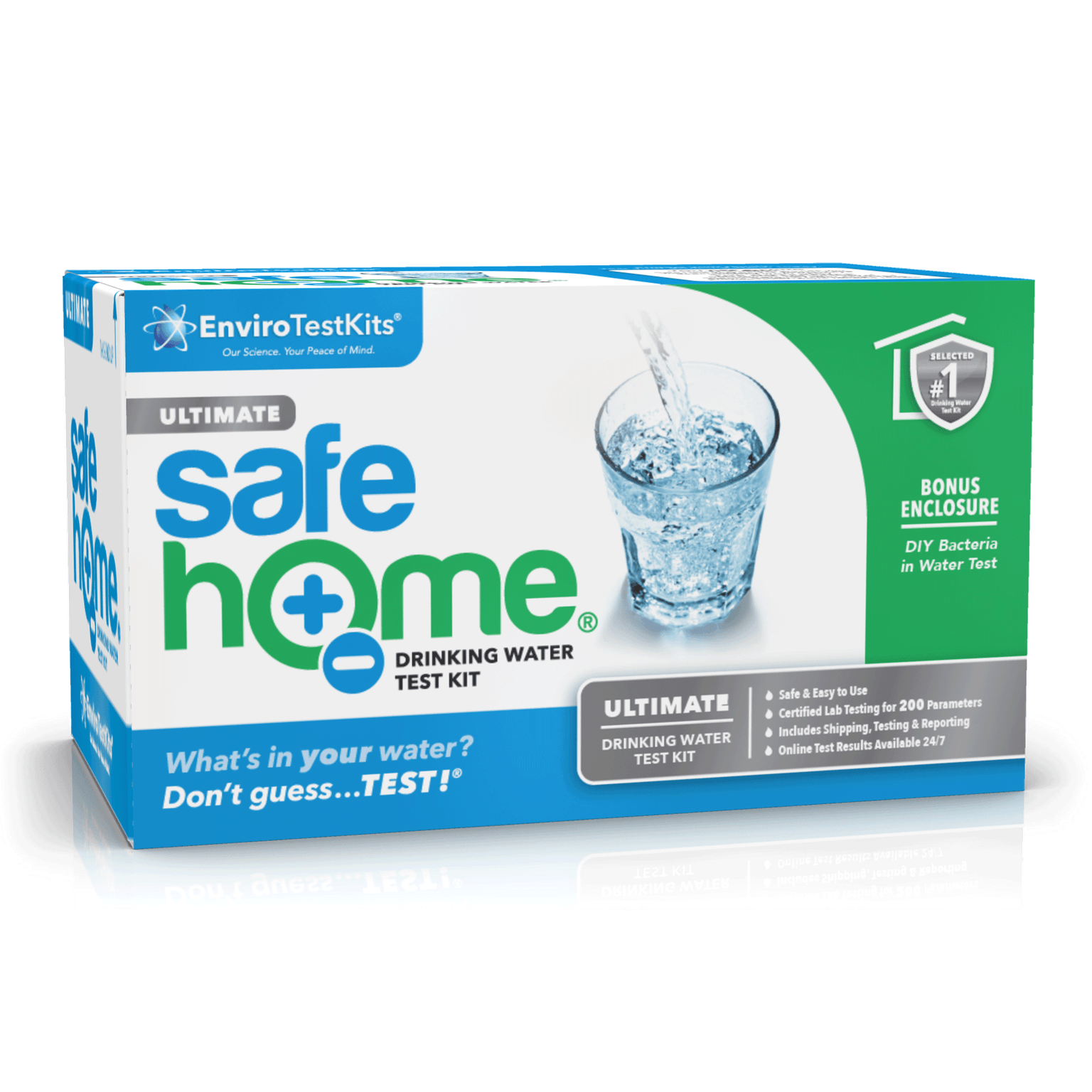
| Safe Home ULTIMATE | Well water, comprehensive | Lab | 200+ | ~$400 |
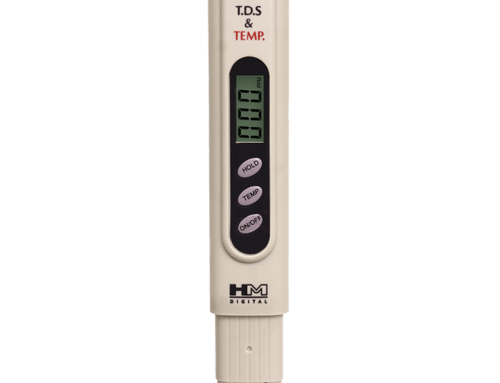
| HM Digital TDS-4 | Filter performance tracking | Meter | TDS only | ~$18 |
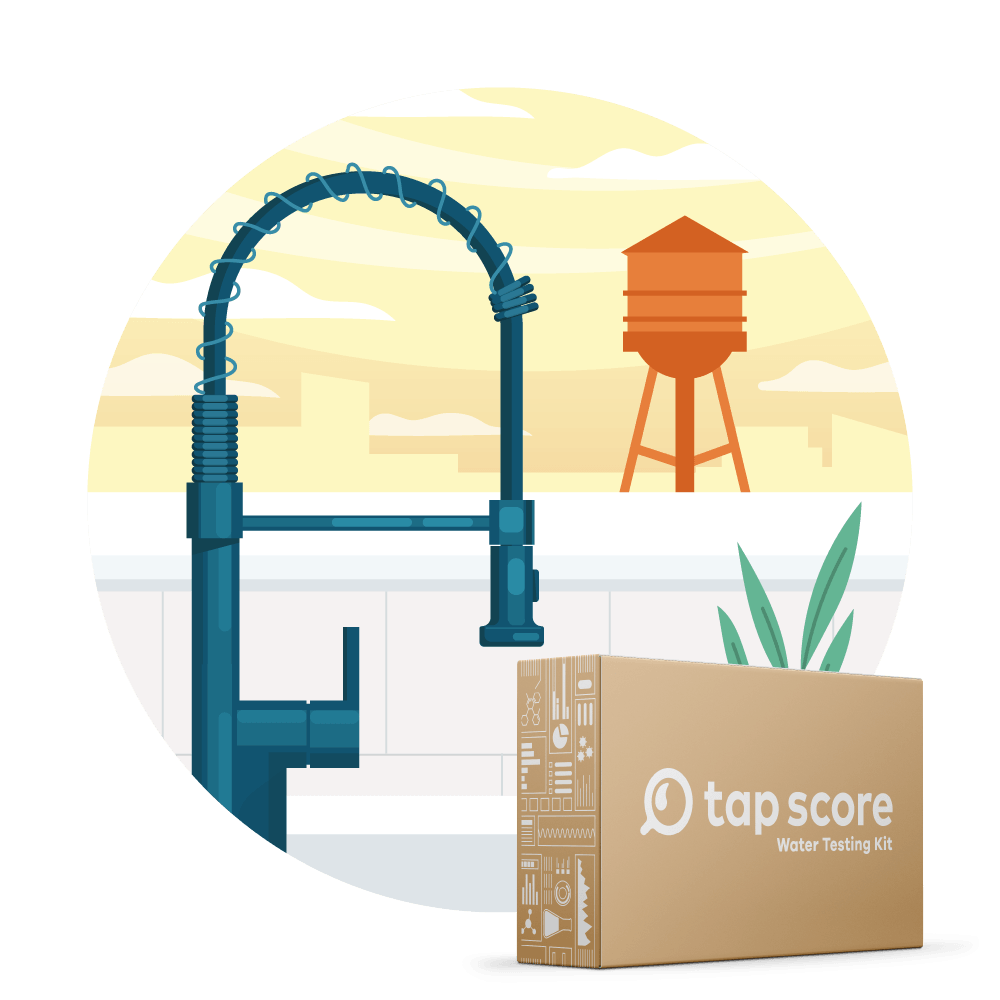
Tap Score Advanced City Water Test (~$149)
Tap Score is consistently rated the best all-round lab kit for homeowners on municipal water — it's the top pick from Wirecutter and covers the contaminants that matter most in 2026. When you order, you receive a sample collection kit with detailed instructions. You fill the provided vials directly from your tap, drop them in the prepaid mailer, and within 7–10 business days you get a secure online report with plain-English explanations of every result.
The 116-analyte panel includes lead, copper, cadmium, arsenic, chromium, nitrates, nitrites, coliform bacteria, disinfection byproducts, pH, hardness, and multiple PFAS compounds. Results are benchmarked against EPA and WHO standards, and the report flags anything above recommended levels with follow-up guidance. Tap Score also offers a free consultation call with a water quality specialist — a rare extra that makes sense of results that can otherwise feel overwhelming.
At ~$149, it's not cheap, but as a one-time diagnostic for a home you're moving into or haven't tested in years, it delivers the most actionable information per dollar of any kit in this price range. If you want to understand what's really coming out of your tap, this is where to start.
Best for: City water users who want a comprehensive, reliable baseline test.
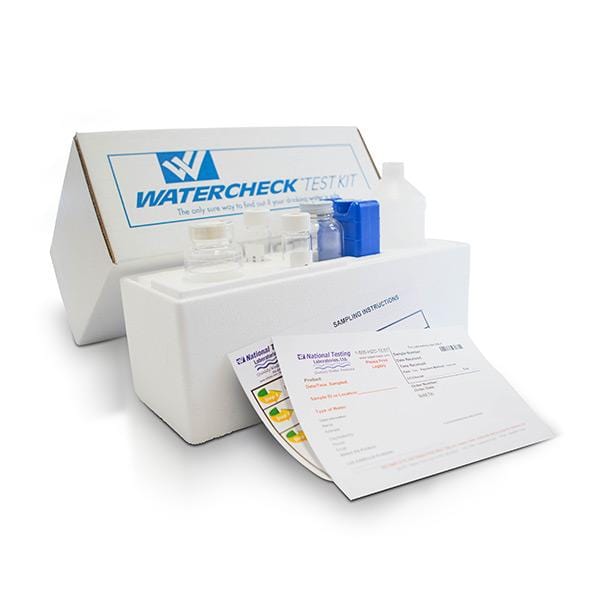
WaterCheck Deluxe (~$140)
WaterCheck is the go-to choice for well water users and anyone whose home sits near farmland, older industrial sites, or known contamination areas. Its Deluxe panel tests for 83 contaminants including pesticides, herbicides, and PCBs — categories that most lab kits at this price point skip entirely. That makes it particularly relevant in agricultural regions where runoff into groundwater is a documented concern.
The kit uses the same mail-in process as Tap Score: collect, ship, receive your online report. Results arrive within 10 business days. WaterCheck's reporting interface is more basic than Tap Score's but still clearly flags values above EPA limits. The inclusion of volatile organic compounds (VOCs) and a broader metals panel makes the Deluxe particularly well suited to older homes and rural properties.
If you're on a private well, this kit covers the CDC's annual testing recommendations and then some. Research suggests that well water chemistry can shift seasonally, so testing every 1–2 years gives you the trend data to catch a developing problem before it becomes a health issue.
Best for: Well water users, rural properties, homes near agricultural land.
VARIFY Premium Drinking Water Test Kit (~$27)
For renters, people who want a fast first look before committing to a lab test, or anyone who just moved into a new home, the VARIFY kit offers the broadest strip-based coverage at a budget-friendly price. It tests for 17 parameters including lead, bacteria, fluoride, iron, copper, pH, hardness, chlorine, and nitrates — more than most strip kits in this price tier.
The instructions are clear and the color charts are well-printed, which matters more than it sounds: poorly printed charts are a common complaint with cheaper strip kits. Results are readable in 1–3 minutes. Lead and bacteria indicators are included, though at low trace concentrations these results should be treated as indicative rather than definitive — a positive lead result warrants confirming with a certified lab test.
VARIFY is a solid starting point for anyone new to water testing who wants to spend under $30. Think of it as triage: if everything reads normal, you have reassurance. If something flags, you know exactly which lab test to order.
Best for: Renters, first-time testers, quick screening before ordering a lab kit.
JNW Direct 100-Strip Water Test Kit (~$15)
If you already have a water filter and want to verify it's working over time, 100 strips for $15 is hard to beat. The JNW kit tests 15 parameters per strip — including chlorine, pH, hardness, nitrates, copper, and iron — and a pack this size lets you test weekly for nearly two years without reordering.
The best use case is pre- and post-filter comparison. Run a strip before your filter and one after; if the post-filter hardness or chlorine reading is identical to the pre-filter reading, your cartridge needs replacing. This kind of regular monitoring catches filter degradation early and is a smarter approach than waiting for taste or odor to change.
As a standalone diagnostic tool, 15-parameter strips have the same accuracy limits as any strip-based test. But as an ongoing monitoring tool for a household that already knows its baseline from a lab test, the JNW kit is the practical, affordable maintenance choice.
Best for: Ongoing filter performance monitoring; households that have already done a baseline lab test.
Safe Home ULTIMATE Water Quality Test (~$400)
For well water users who want the most complete picture available in a residential kit, Safe Home's ULTIMATE panel tests for more than 200 parameters — including the full metals suite, all EPA-regulated PFAS compounds, microbiological contaminants, VOCs, pesticides, herbicides, radiological parameters, and more. It's the closest thing to a municipal-grade analysis available for home use.
The higher price is justified in specific situations: properties with unknown water source history, homes near Superfund sites or industrial facilities, agricultural wells, or any case where you suspect contamination but don't know what type. The ULTIMATE kit removes the guesswork entirely — if it's in your water, this test will find it.
The report is detailed and takes 10–14 business days. Safe Home includes PDF summaries alongside the full data tables, which helps make sense of 200+ data points. For most city water users this level of testing is overkill, but for a well-water property purchase or a persistent unexplained health concern, it's money well spent.
Best for: Well water, rural properties, homes with unknown water history, due diligence before purchasing property.
HM Digital TDS-4 Meter (~$18)
The HM Digital TDS-4 is a straightforward handheld meter that gives you a real-time TDS reading in seconds. It's not a contaminant test — it measures total dissolved solids as a single aggregate number — but for filter users it's one of the most useful $18 tools you can own.
The primary workflow: measure your raw tap water TDS, measure post-filter TDS, and track the gap over time. A well-functioning RO system should remove 90–98% of TDS; if your raw water reads 250 ppm and post-filter reads 200 ppm, your membrane is failing. The TDS-4 has a built-in thermometer, auto-off, and a hold button — all the basics covered in a pocket-sized package.
It won't tell you whether your water has lead or PFAS, but as part of a broader testing strategy it adds an easy ongoing check that takes ten seconds per measurement. Pair it with a lab kit for your baseline and strip tests for periodic monitoring, and you've covered all three tiers of water quality tracking for well under $200 total.
Best for: Anyone with a whole-house or under-sink filter who wants to verify and monitor performance.
What to Do After You Get Your Results
Testing your water is only useful if you act on the findings. Here's a quick guide to next steps based on common results:
High lead: Replace any lead service lines, use a certified NSF/ANSI 53 filter at every drinking tap, and flush cold water for 30 seconds before using it in the morning. Check our complete guide to water filtration options on vivavenly.com for filter recommendations by contaminant.
High hardness (>180 mg/L): A salt-based water softener or template-assisted crystallization (TAC) system will protect your appliances and plumbing. Hardness itself is not a health risk, but scale buildup shortens the lifespan of water heaters and dishwashers.
Bacteria detected: Shock-chlorinate your well immediately and retest after 2 weeks. If contamination recurs, a UV purification system provides continuous disinfection. Do not drink the water until a follow-up test is clear.
Elevated nitrates (>5 mg/L with infants or pregnant women in home): Use bottled water or an under-sink RO system for drinking and cooking. Boiling does not reduce nitrates and actually increases their concentration.
PFAS detected: Reverse osmosis and activated carbon block filters certified for PFAS removal are the most effective treatment options. Research suggests that standard pitcher filters vary widely in PFAS removal effectiveness — look for NSF/ANSI 58 (RO) or NSF/ANSI 53 (carbon block) certification.
Frequently Asked Questions
How often should I test my home water?
Well water should be tested at minimum once a year, covering coliform bacteria, nitrates, pH, and dissolved solids as a baseline. City water users should test every 2–3 years, or any time there's a local contamination event, a change in your water's taste or smell, or you do major plumbing work in the home.
Are home water test strips accurate enough to rely on?
For parameters like pH, hardness, and chlorine, strips are reasonably reliable for a quick check. For health-critical contaminants — lead, arsenic, PFAS, bacteria — strips should be treated as a screening tool only. A positive or suspicious result on a strip warrants confirmation with a certified lab test.
What is TDS and should I worry if it's high?
TDS (Total Dissolved Solids) measures all dissolved minerals and salts combined. Municipal water typically reads 50–300 ppm; well water varies widely. High TDS isn't automatically dangerous — much of it may be harmless minerals like calcium and magnesium. A high reading is a prompt to investigate further with a lab test, not cause for immediate alarm.
My water looks and tastes fine — do I still need to test?
Yes. Lead, PFAS, arsenic, and many bacteria are colorless, odorless, and tasteless at residential concentrations. The only reliable way to know your water is safe is to test it. Appearance and taste are not valid proxies for contaminant-free water.
What's the difference between a lab kit and a test strip?
Lab kits involve sending a water sample to an EPA-certified laboratory for precise quantitative analysis — results are in parts per billion and can detect trace contaminants. Test strips use colorimetric chemistry at home for a qualitative result in minutes. Lab kits are more accurate and cover more parameters; strips are faster and cheaper but provide less precise data.
Can I test my water for PFAS at home?
Not reliably with strip kits — PFAS detection requires laboratory instrumentation. Mail-in lab kits like Tap Score Advanced and Safe Home ULTIMATE include PFAS panels. Given the EPA's 2024 MCLs for PFAS compounds, this is now a standard item to include when ordering a comprehensive water test.
Shop these picks
Related guides