Are Whole House Water Filters Worth It? 2026
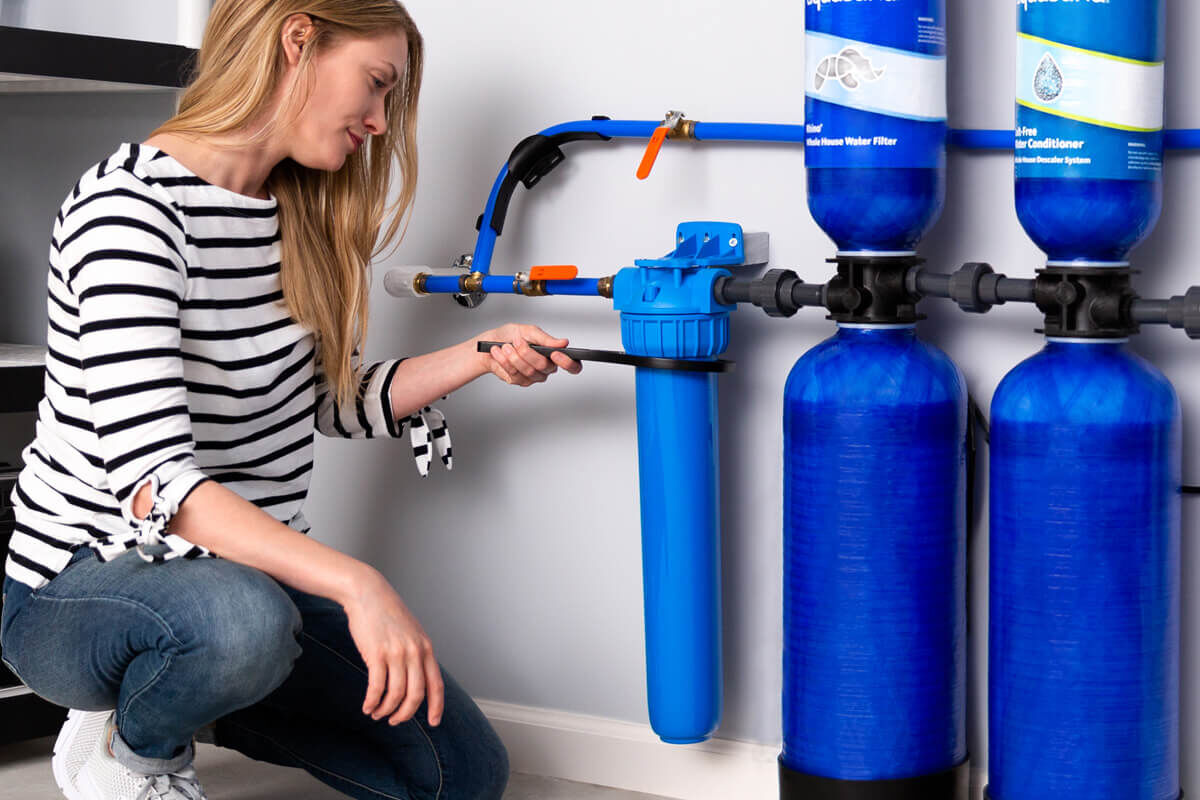
Most reviews tell you which whole house water filter to buy. This one starts with a harder question: should you buy one at all? With upfront costs running $700–$1,800 — plus installation — the honest answer is "it depends." Here's the framework for making that call, followed by the best systems if you decide to go for it.
The Case For (and Against) Whole House Filtration
A whole house water filter — also called a point-of-entry (POE) system — treats every drop of water that enters your home before it reaches any tap, shower, or appliance. That's a meaningfully different proposition from a pitcher filter or under-sink unit, which only protect one outlet.
The appeal is real. Studies indicate that contaminants like chlorine and chloramine don't just affect drinking water — they off-gas in hot showers and get absorbed through skin. Research suggests long-term exposure to disinfection byproducts (DBPs), a chlorine reaction product, may carry health risks. And if you're on well water, bacteria, iron, and hydrogen sulfide can affect every fixture in your home, not just the kitchen faucet.
That said, whole house filtration is overkill for some households. If your only concern is the taste of your drinking water, a $50 pitcher filter or a $200 under-sink reverse osmosis unit will serve you better at a fraction of the cost. The math changes when you want filtered water everywhere — for cooking, coffee, showers, laundry, and appliance protection from scale — or when you're dealing with well water that has widespread contamination.
The honest answer: a whole house filter is worth the money if you want comprehensive protection and can afford the $1,200–$2,400 total first-year cost (unit + installation). It's not worth it if drinking water quality is your only goal.
What to Look for When Choosing a System
Filtration Media: Carbon vs. KDF vs. RO
The filter media determines what a system actually removes. Activated carbon is the workhorse — it handles chlorine, chloramine, VOCs, and many PFAS compounds through adsorption. Catalytic carbon (an upgraded form) is more effective against chloramine, which standard carbon struggles with. KDF (Kinetic Degradation Fluxion) media adds heavy metal reduction and inhibits bacterial growth inside the filter housing. Systems combining catalytic carbon with KDF score highest in independent testing for breadth of contaminant removal.
Reverse osmosis (RO) removes the widest range of contaminants, including nitrates and dissolved solids, but it's rarely used for whole-house applications because it wastes water and drops flow rates dramatically. Most POE systems use carbon-based media specifically because they can handle household flow rates without killing water pressure.
Flow Rate and Pressure Drop
This is the spec most buyers overlook. A whole house filter sits on your main water line, so every fixture draws through it simultaneously. Look for systems rated at 7–15 GPM (gallons per minute) for most homes; larger homes or homes with multiple bathrooms running at once need 15–20 GPM. Undersized systems cause noticeable pressure drops — a common complaint in online reviews — especially during peak usage like morning showers.
Filter age matters too. A clogged filter at the end of its service life can cut pressure significantly. Systems with large-capacity tanks (500,000–1,000,000 gallons) reduce how often you face this problem.
NSF Certification: Decoding the Numbers
The NSF/ANSI certification numbers on filter packaging are not interchangeable — each covers different contaminants:
- NSF/ANSI 42 — aesthetic improvements only (chlorine taste, odor, particulates)
- NSF/ANSI 53 — health-effect contaminants (lead, VOCs, cysts)
- NSF/ANSI 58 — reverse osmosis systems (TDS, nitrates, heavy metals)
- NSF/ANSI 401 — emerging contaminants (PFAS, pharmaceuticals, hormones)
A filter certified only to NSF 42 is not certified to remove lead or PFAS. Look for systems carrying both NSF 53 and NSF 401 if contaminant reduction — not just taste improvement — is your goal.
Total Cost of Ownership Over 5 Years
The sticker price is only part of the equation. Factor in:
- Unit cost: $180–$900
- Installation (plumber): $200–$500
- Filter replacements per year: $50–$300
- 5-year total: roughly $700–$3,000 depending on system and local labor rates
A $900 premium system with long-life filters and a lifetime warranty can cost less over five years than a $230 budget system with expensive, frequently replaced cartridges. Run the math before you buy.
Our Top Picks for 2026
| Model | Best For | Media | Flow Rate | Price |
|---|---|---|---|---|
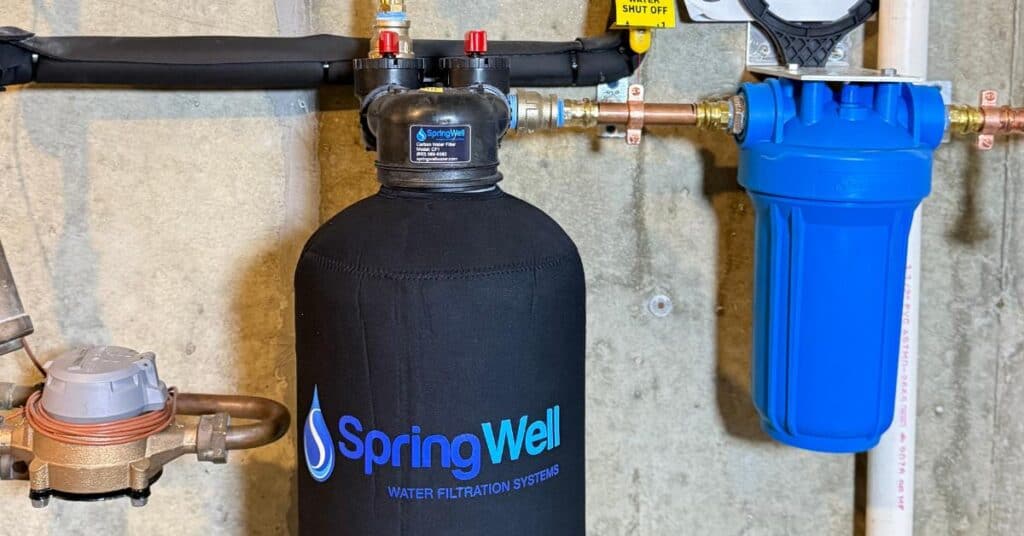
| SpringWell CF1 | City water, whole-home | Catalytic carbon + KDF | 9–20 GPM | ~$900 |
| iSpring WGB32B | Value pick, PFAS removal | 3-stage carbon | 15 GPM | ~$230 |
| Aquasana Rhino EQ-1000 | Scale + chlorine | Carbon + KDF + UV option | 7 GPM | ~$800 |
| Kind E-1000 | Mid-range budget | Carbon block | 15 GPM | ~$450 |
| Express Water 3-Stage | Tight budget | Sediment + carbon + carbon | 15 GPM | ~$180 |
SpringWell CF1 (~$900)
The SpringWell CF1 is the consensus top pick among independent water filtration reviewers in 2026, and it's easy to see why. Its filter tank holds enough catalytic carbon and KDF media to handle 1,000,000 gallons — roughly 10 years of use for an average family — before the media needs replacing. Most competing systems cap out at 600,000–800,000 gallons, which means more frequent and more expensive replacements.
Flow rate options scale with your home: the CF1 handles 9 GPM, the CF4 goes to 20 GPM for larger homes. SpringWell backs the system with a lifetime warranty on the tank and a 6-month satisfaction guarantee, which is unusually generous in this category.
The main drawback is price. At ~$900 before installation, it's a serious commitment. But for city water households that want comprehensive chlorine, chloramine, PFAS, and heavy metal reduction with minimal long-term maintenance, the CF1 delivers the best five-year value in its class.
Best for: City water homes prioritizing low maintenance and long-term value.
iSpring WGB32B (~$230)
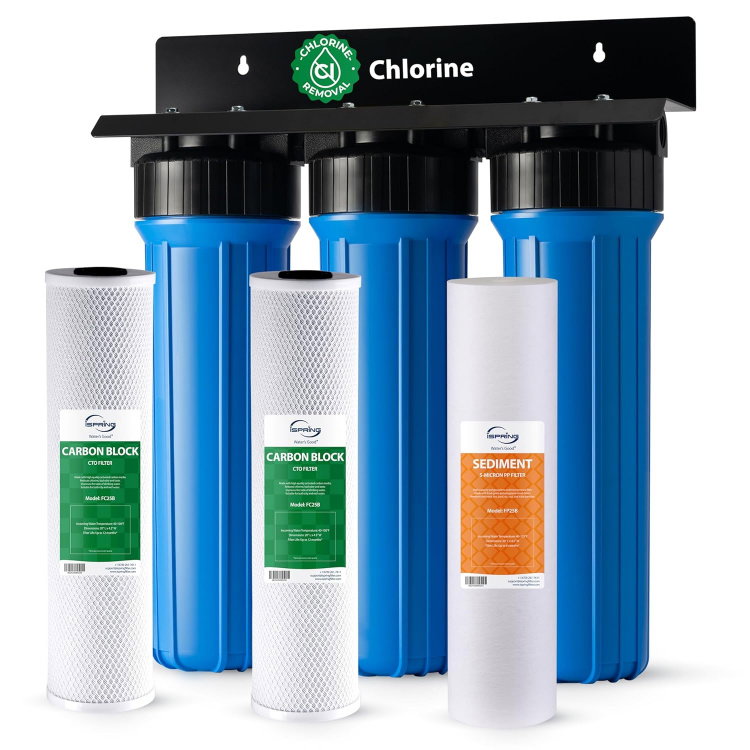
The iSpring WGB32B is Amazon's best-selling whole house filter, and it punches well above its price. The three-stage setup runs water through a 5-micron polypropylene sediment filter, then a high-capacity CTO carbon block, then a second carbon stage for residual taste and odor. SGS lab testing confirms it removes up to 99% of PFAS (PFOA and PFOS), which is remarkable for a sub-$250 system.
Flow rate is rated at 15 GPM, which handles most single-family homes without pressure issues. Filter replacement costs are low — roughly $60–$80 per year — making the 5-year total cost competitive with more expensive systems.
The tradeoff: it lacks KDF media, so it doesn't address heavy metals as comprehensively as the SpringWell or Aquasana. For city water households where chlorine, sediment, and PFAS are the primary concerns, that's a reasonable trade for the price difference.
Best for: Budget-conscious buyers on city water who want PFAS reduction without a four-figure investment.
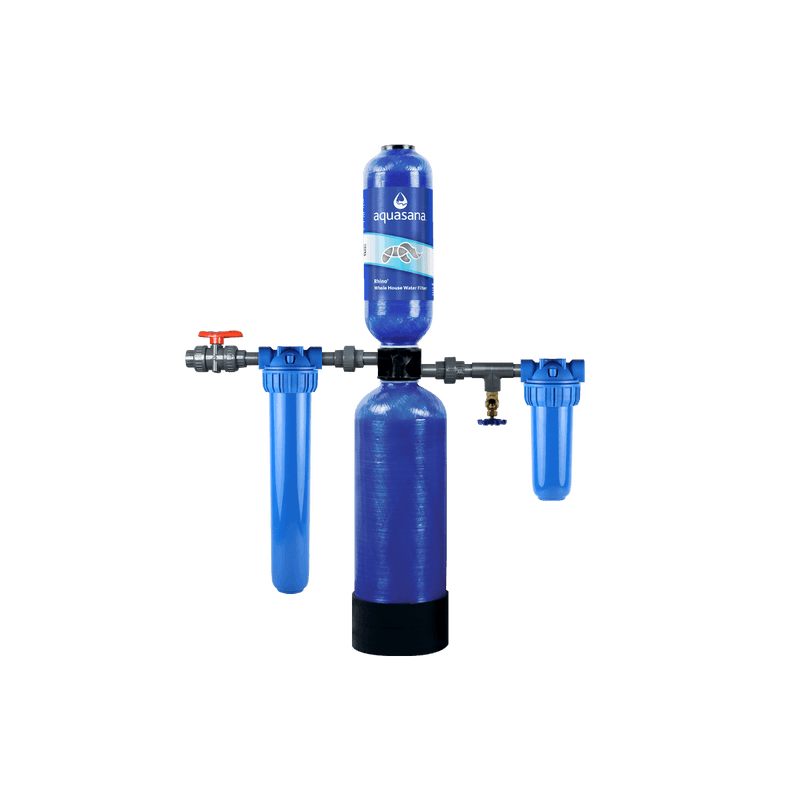
Aquasana Rhino EQ-1000 (~$800)
The Aquasana Rhino has been a fixture in whole house filtration for years, and the EQ-1000 remains one of the most versatile systems available. Its combination of carbon filtration, KDF media, and an optional UV purifier add-on makes it the strongest choice for households dealing with both chemical and biological concerns.
The EQ-1000's salt-free scale inhibitor is a genuine differentiator. Rather than removing calcium and magnesium (which softeners do), it converts them into a crystalline form that won't deposit on pipes and appliances. That means you get scale protection without the sodium addition, wasted water, or maintenance hassle of a traditional softener.
Flow rate is rated at 7 GPM — lower than the SpringWell or iSpring — which can cause minor pressure drops in larger homes during peak use. For most three-bathroom homes, it's sufficient. The 1,000,000-gallon media life is competitive with the SpringWell CF1 at a similar price point. You can explore more of our water quality guides on the vivavenly homepage.
Best for: Households wanting chemical filtration plus scale control, or those considering adding UV protection for well water.
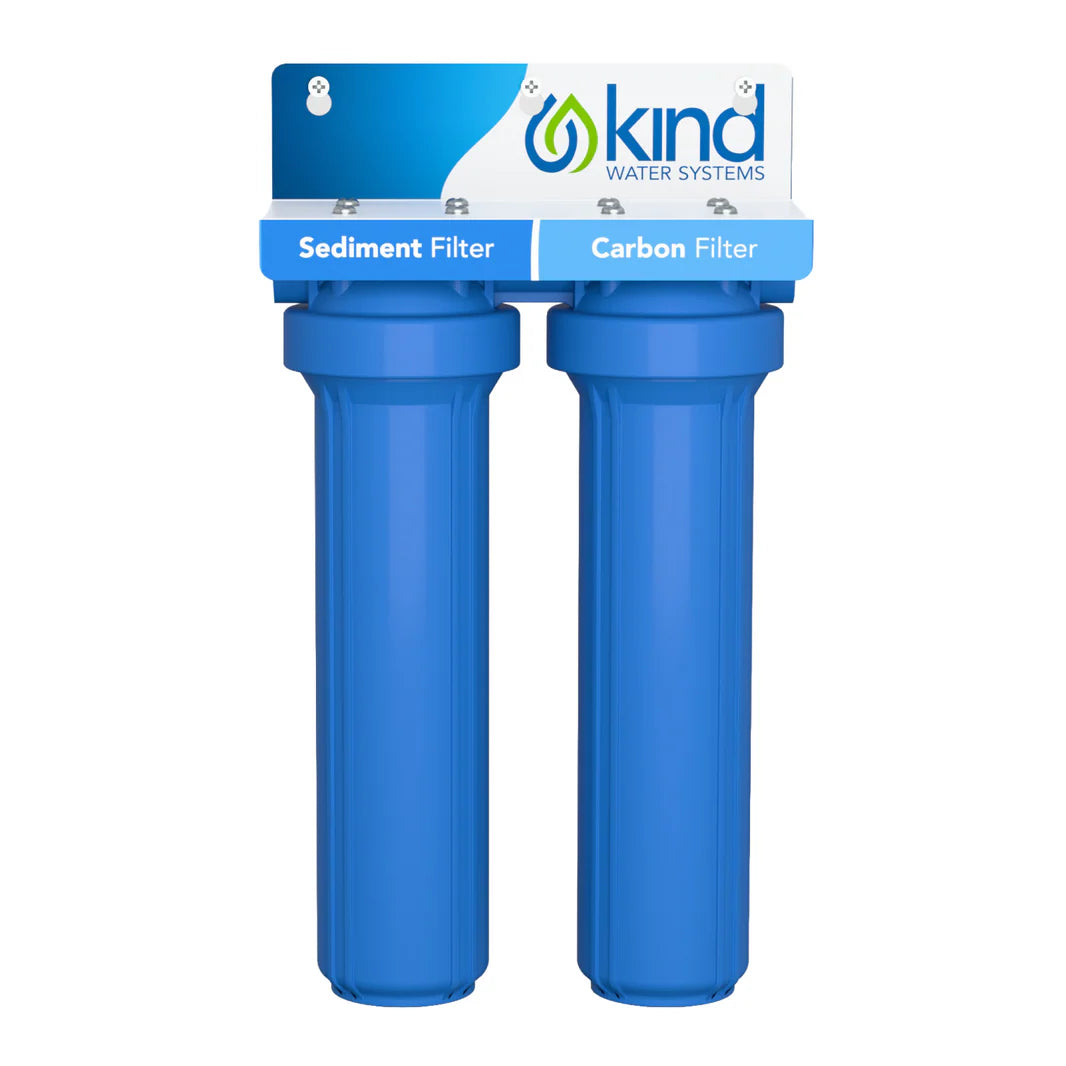
Kind E-1000 (~$450)
The Kind E-1000 occupies a useful middle ground that most roundups overlook: it's half the price of the SpringWell and Aquasana but more capable than budget three-stage systems. Its carbon block media is rated to 100,000 gallons per cartridge at 15 GPM, and the build quality reflects a higher grade than its price suggests.
Installation is straightforward with clear instructions and standard port sizing that fits most plumbing configurations without adapters. Annual filter costs run around $100–$150, bringing its five-year total to roughly $1,000 — reasonable for what it delivers.
The E-1000 doesn't have KDF media or the long-life tanks of the premium systems, so it's better suited to city water with low-moderate contamination levels than to aggressive well water treatment. For renters with landlord permission or first-time homeowners testing the waters before committing to a premium system, it's a sensible entry point.
Best for: Mid-budget buyers on city water who want a step up from budget three-stage systems without premium pricing.
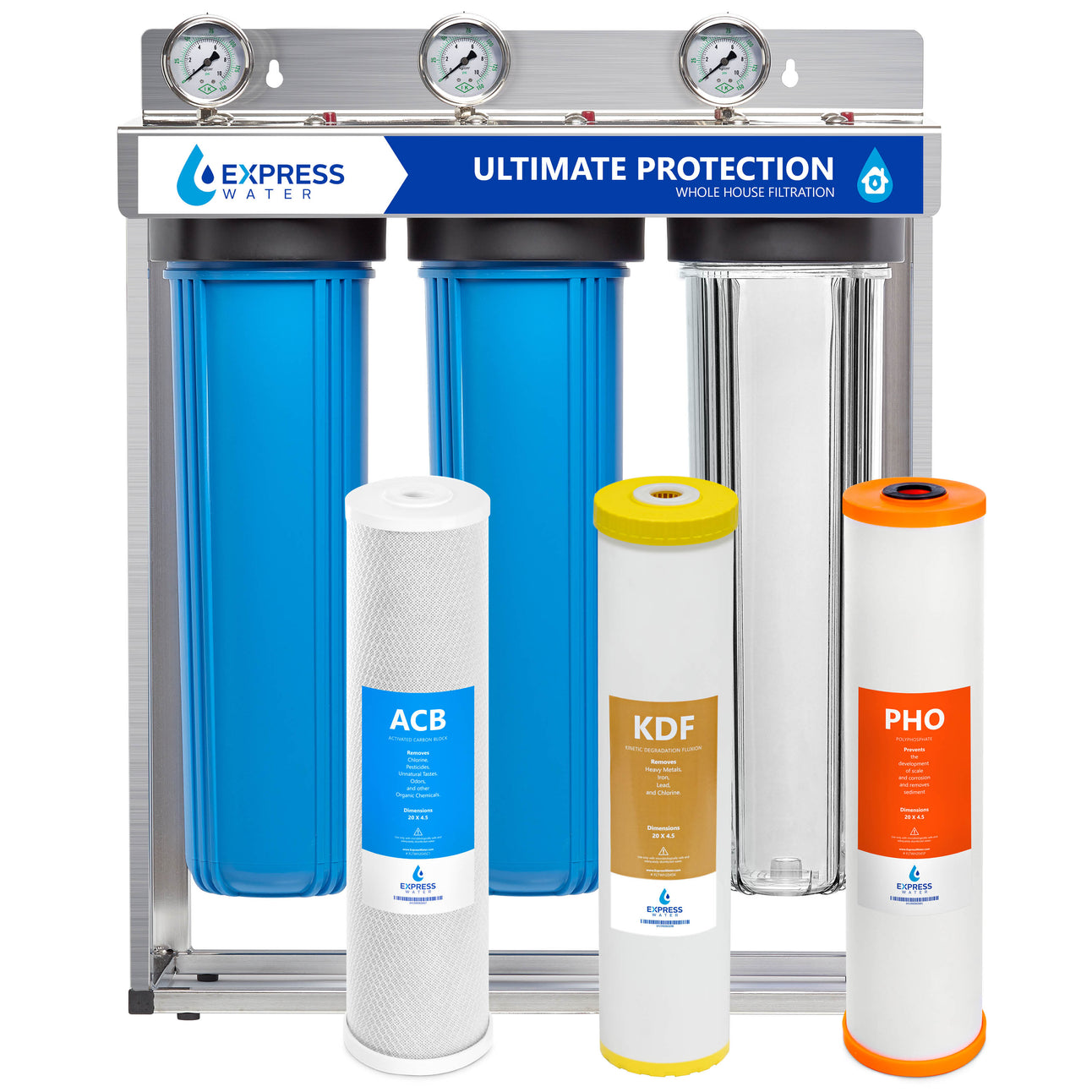
Express Water 3-Stage (~$180)
For households with tight budgets or those unsure whether a whole house filter is right for them long-term, the Express Water 3-Stage is the most accessible entry point. Its setup — sediment pre-filter, carbon block, and a final polishing carbon stage — covers the basics: chlorine, sediment, some VOCs, and general taste and odor improvement.
At 15 GPM it won't cause pressure issues, and the widely available filter cartridges keep replacement costs predictable. It's not rated for PFAS or heavy metals, and it lacks the media volume to handle very high-sediment well water. But for city water apartments, vacation homes, or short-term rentals where you want some filtration without a major investment, it does what it promises.
For deeper coverage of water contaminants and filter comparisons, see the water quality resources on our homepage.
Best for: Budget buyers on city water, vacation homes, or anyone wanting to trial whole-house filtration before upgrading.
Frequently Asked Questions
Do I need to test my water before buying a whole house filter?
Yes — strongly recommended. Municipal water suppliers publish annual Consumer Confidence Reports (CCRs) that list detected contaminants, but private well owners have no equivalent. A basic mail-in test kit ($30–$150) tells you exactly what you're dealing with and prevents buying the wrong filter type. A system optimized for chlorine removal won't help much if your main issue is iron or bacteria.
Will a whole house filter reduce my water pressure?
A properly sized system on healthy plumbing causes minimal pressure drop — typically 5–10 PSI. Problems arise when the filter is undersized for household flow rate, the filter cartridges are overdue for replacement, or pre-existing pressure issues exist in the home's plumbing. Check the system's GPM rating against your home's peak demand before purchasing.
How long do whole house water filters last?
The filter housings and tanks on quality systems (SpringWell, Aquasana) last 10–20 years or more. Filter media and cartridges are the consumable parts — replacement intervals range from every 3 months (budget sediment filters) to every 5–10 years (large-capacity media tanks like the SpringWell CF1). Always factor replacement frequency and cost into the purchase decision.
Is a whole house filter the same as a water softener?
No. Water softeners specifically address hard water — high calcium and magnesium — through an ion exchange process that replaces those minerals with sodium. Whole house carbon filters address chlorine, PFAS, VOCs, and heavy metals, but they don't soften hard water. Some systems (like the Aquasana Rhino) include a salt-free scale inhibitor as a separate stage, which provides partial scale protection without the downsides of a traditional softener.
Can I install a whole house water filter myself?
DIY installation is possible for those comfortable with basic plumbing — the process involves cutting into the main supply line and adding unions and shut-off valves. Most systems include clear instructions. That said, mistakes on the main supply line can cause significant water damage, and many homeowners choose to hire a plumber ($200–$500) for the peace of mind. Check local building codes, as some jurisdictions require licensed work on main water lines.
What's the difference between NSF 42 and NSF 53 certification?
NSF/ANSI 42 certifies that a filter improves taste and odor — it's an aesthetic standard, not a health one. NSF/ANSI 53 certifies reduction of specific health-effect contaminants like lead, VOCs, and cysts. A filter carrying only NSF 42 certification is not certified to remove lead or other harmful substances. For health-focused filtration, look for NSF 53 and NSF 401 (which covers PFAS and emerging contaminants) on the product listing.
Shop these picks
Related guides