Best Water Filters for PFAS Removal 2026
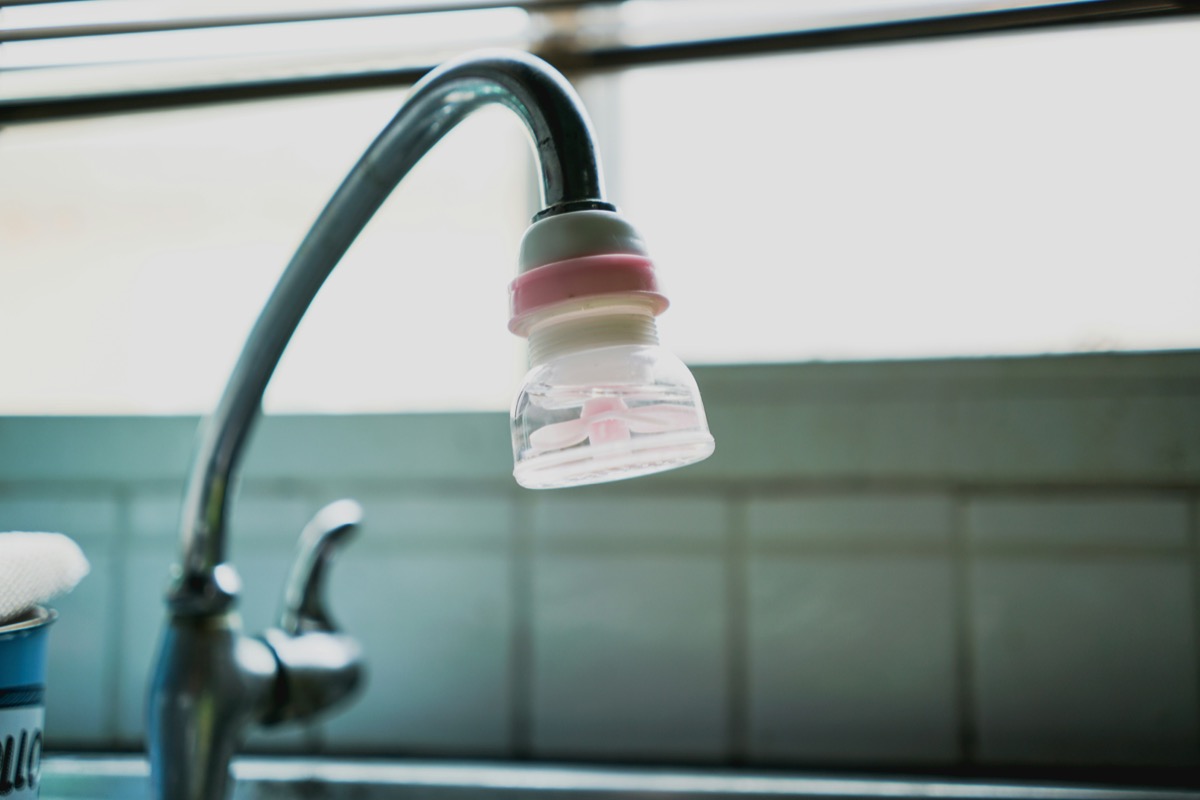
Best Water Filters for PFAS Removal 2026: Lab-Tested Picks That Actually Work
PFAS — per- and polyfluoroalkyl substances — have been detected in the drinking water of hundreds of millions of Americans, and the EPA only finalized enforceable limits in 2024. Most utilities are still years away from full compliance. If you're waiting for your tap water to be clean before you drink it, you could be waiting a long time. The good news: the right water filter can reduce PFAS to non-detectable levels today. This guide covers the six best options in 2026, from under-sink powerhouses to no-install pitchers — with a clear explanation of which certifications actually matter.
Why PFAS in Drinking Water Is a 2026 Priority

PFAS is an umbrella term for thousands of synthetic chemicals used in non-stick cookware, food packaging, firefighting foam, and industrial coatings. They're called "forever chemicals" because they don't break down — in the environment or in the human body. Research suggests long-term PFAS exposure is linked to elevated cancer risk, thyroid disruption, immune suppression, and developmental problems in children.
The Environmental Working Group estimates that more than 200 million Americans drink tap water contaminated with detectable PFAS. A 2026 breakthrough from researchers published in ScienceDaily demonstrated a nano-cage filtration method capable of trapping even short-chain PFAS variants — the ones that have historically slipped through conventional filters — suggesting the science of removal is advancing rapidly. But most of that technology hasn't reached consumer products yet, which means choosing the right certified filter today is the most reliable path to protection.
The EPA's 2024 maximum contaminant levels set legally enforceable limits of 4 parts per trillion for PFOA and PFOS individually, and 10 ppt for certain combinations of other PFAS compounds. Many municipal systems are still in violation. Home filtration isn't a backup plan — for millions of households, it's the primary line of defense.
What to Look for: Key Buying Criteria
NSF P473 Certification — The Only Certification That Counts for PFAS
This is the single most important thing to understand before buying any filter marketed for PFAS removal. There is a meaningful difference between a filter that has been tested for PFAS reduction and one that has been certified for it.
NSF/ANSI P473 is the PFAS-specific certification standard. A filter bearing this mark has been independently verified to reduce PFOA and PFOS to below a defined threshold under controlled conditions. NSF 53 and NSF 58 (the general contaminant and reverse osmosis standards) can include PFAS claims, but only if the manufacturer specifically tested and certified for those compounds. "NSF tested" printed on a box without a specific standard code is marketing language, not a performance guarantee. Always look for the P473 designation or a specific PFAS claim under NSF 53/58.
Filter Technology: RO vs. Carbon vs. Hybrid
Reverse osmosis (RO) is the gold standard for PFAS removal. It forces water through a semipermeable membrane with pores small enough to block PFAS molecules, and independent studies consistently show RO systems reducing PFAS by 90–99%. The trade-off is water waste: most RO systems produce 3–5 gallons of wastewater for every gallon of filtered water, though newer tankless models like the Waterdrop G3P800 have improved this to a 3:1 ratio.
Activated carbon filters are more variable. Studies show activated carbon reducing PFAS anywhere from 0% to 73% depending on the filter density, carbon type, flow rate, and how recently the filter was replaced. A worn-out carbon filter can actually release previously captured PFAS back into the water. Carbon-based filters are only reliable for PFAS removal when they carry the NSF P473 certification — without it, performance is unpredictable.
Hybrid non-RO systems, like those used by Aquasana, combine multiple media stages including activated carbon and ion exchange to achieve certified PFAS removal without membrane waste. These systems keep naturally occurring beneficial minerals in the water that RO strips out.
Long-Chain vs. Short-Chain PFAS
Most filters — and most certifications — focus on PFOA and PFOS, the two long-chain PFAS compounds with the most research behind them. Short-chain variants like GenX, PFBS, and PFBA are increasingly common as manufacturers phased out long-chain compounds, and they are harder to capture. Standard RO membranes are effective against most short-chain PFAS, but pitcher and carbon-based filters vary significantly. When short-chain removal matters, RO systems remain the most reliable choice.
Best Water Filters for PFAS Removal: Our Top Picks for 2026
| Model | Best For | Technology | NSF Cert | Price |
|---|---|---|---|---|
| Waterdrop G3P800 | Most households | Tankless RO | P473 | ~$300 |
| AquaTru Classic | Renters / no plumbing | Countertop RO | P473 | ~$350 |
| iSpring RCC7AK | Budget under-sink | 6-stage RO + remineralization | NSF 58 | ~$200 |
| Aquasana AQ-5300+ | Mineral-conscious buyers | 3-stage non-RO | P473 | ~$180 |
| Clearly Filtered Pitcher | Renters, small households | Affinity Filtration | P473 | ~$90 |
| Epic Nano Pitcher | Budget pitcher | Nano filtration | P473 | ~$75 |
Waterdrop G3P800 (~$300)
The Waterdrop G3P800 is the best all-around PFAS water filter for most homes in 2026. It's a tankless under-sink reverse osmosis system with NSF P473 certification, an 800-gallon-per-day production capacity, and a smart app that tracks filter life and water quality in real time. In independent lab testing using a full 14-analyte Tap Score PFAS panel, every compound came back not detected.
The 3:1 pure-to-waste ratio is among the best in the category, significantly better than older RO systems that wasted 5 or more gallons per filtered gallon. Installation takes about 30–45 minutes with basic plumbing knowledge — the system connects to the cold water supply under the sink and delivers filtered water through a dedicated faucet. Filter replacement is tool-free via a twist-and-click mechanism, and the app sends reminders based on actual usage rather than a fixed calendar.
Where the G3P800 falls short is mineral content: like all RO systems, it strips beneficial minerals from the water. Some users find the taste flat compared to tap or filtered non-RO water. A remineralization filter add-on is available separately.
Best for: Homeowners who want certified PFAS removal, smart monitoring, and don't mind a small installation project.
AquaTru Classic (~$350)
The AquaTru Classic is the top choice for renters, apartment dwellers, and anyone who can't or won't modify their plumbing. It's a countertop reverse osmosis system that requires zero installation — fill the tank with tap water, plug it in, and it filters via a built-in pump. NSF P473 certification is verified by IAPMO, and independent testing has confirmed non-detectable PFAS levels in filtered output.
The four-stage filtration process includes a pre-filter, RO membrane, activated carbon, and a final carbon polishing stage. The unit holds about a gallon of filtered water in the reservoir, which is sufficient for one or two people but can feel slow for larger households. It's the same core filtration technology as more expensive installed systems, packaged for portability.
At ~$350 the AquaTru costs more upfront than comparable under-sink RO systems, and the countertop footprint (roughly the size of a small coffee maker) requires dedicated counter space. Filter replacement costs run around $60–80 per year depending on usage, which is in line with other certified systems. For renters moving frequently, the ability to take the filter to a new home makes the premium worthwhile.
Best for: Renters, travelers, and anyone who wants certified PFAS removal without touching a pipe.
iSpring RCC7AK (~$200)
The iSpring RCC7AK is the most popular PFAS-capable under-sink filter on Amazon, with over 12,000 reviews and a 4.7-star average rating. It's a six-stage reverse osmosis system that removes 99%+ of PFAS compounds along with hundreds of other contaminants including lead, arsenic, chloramines, and nitrates. What distinguishes it from basic five-stage RO systems is the sixth-stage alkaline remineralization filter, which adds calcium, magnesium, and potassium back into the water after the RO membrane strips them out.
The result is filtered water that tastes noticeably better than standard RO output — less flat, slightly alkaline, and closer to the mineral profile of spring water. For households concerned about long-term mineral intake from drinking demineralized water, this is a meaningful distinction. Installation requires moderate DIY confidence; the included instruction manual is detailed, and iSpring's customer support is consistently praised in reviews.
The RCC7AK carries NSF 58 certification (reverse osmosis) rather than P473 specifically, but RO membranes are validated technology for PFAS removal at 90–99%+ efficiency. Buyers who want the P473 designation explicitly should look at the Waterdrop or AquaTru instead. For most households, the performance is equivalent and the $100+ savings is real.
Best for: Budget-conscious homeowners who want remineralized water and a trusted, heavily reviewed system.
Aquasana AQ-5300+ (~$180)
The Aquasana AQ-5300+ is a rare find: an NSF P473-certified under-sink filter that achieves PFAS removal without a reverse osmosis membrane. Its three-stage system combines a pre-filter, a proprietary Claryum selective filtration media, and a post-filter carbon stage. The Claryum media targets specific contaminants — including PFAS, lead, mercury, and chloramines — while allowing beneficial minerals like calcium and magnesium to pass through.
This matters for two reasons. First, there's no wastewater: the AQ-5300+ is a flow-through system, not a membrane system, so no water is wasted in filtration. Second, the taste profile is different — mineral-rich water instead of the flat output typical of RO. Studies indicate that remineralized RO water and mineral-retaining filtered water are nutritionally comparable for most people, but taste preference varies.
Flow rate is higher than most RO systems, and the dual-handle faucet included with the system allows unfiltered water for cleaning and cooking alongside the filtered output. Annual filter replacement costs around $50–70. The AQ-5300+ is one of the most underreported options in the PFAS filter category — its non-RO approach and P473 certification make it a compelling choice for environmentally conscious buyers or those who've switched from RO specifically due to water waste or mineral concerns.
Best for: Buyers who want certified PFAS removal, zero water waste, and mineral-rich taste.
Clearly Filtered Pitcher (~$90)
The Clearly Filtered Pitcher is the best pitcher-form PFAS filter available in 2026. Unlike standard Brita or PUR pitchers — which are not certified for PFAS removal at meaningful levels — the Clearly Filtered uses a proprietary Affinity Filtration Technology that is independently verified to remove 99.9%+ of PFOS and over 98% of PFOA. It holds NSF P473 certification, which means the removal claim has been validated, not just stated.
The pitcher holds 10 cups of water and uses a two-stage gravity filter. Fill time runs about 10–15 minutes for a full pitcher, which is slower than carbon-only pitchers but acceptable given the additional filtration complexity. Each filter lasts about 100 gallons (roughly 3–4 months for one to two people), and replacement filters cost around $20–25 each — making annual filter costs comparable to Brita at $60–80 per year.
For renters, small households, and anyone looking for a low-cost entry point to certified PFAS protection, this is the most accessible option on this list. It also travels well. The trade-off versus installed systems is convenience: filling and waiting rather than filtered water on demand. If you're a family of four going through several pitchers a day, the operational friction adds up quickly — at that volume, an under-sink system is worth the installation effort. See our home water filtration guide for a comparison of whole-home approaches.
Best for: Renters, singles, and couples who want certified PFAS removal at the lowest upfront cost.
Epic Nano Pitcher (~$75)
The Epic Nano Pitcher is the most affordable NSF P473-certified PFAS filter on this list, and a strong alternative to Clearly Filtered for buyers on a tighter budget. It removes 99.5% of PFAS compounds including PFOA, PFOS, and several short-chain variants, backed by third-party lab testing. The nano filtration technology uses a hollow fiber membrane — a finer physical barrier than activated carbon alone — which is why it achieves consistent results across a wider range of PFAS chain lengths.
The 150-gallon filter life is 50% longer than most competing pitchers, which helps offset the upfront cost over time. Fill rate is slower than standard pitchers but comparable to other nano or RO-based pitcher systems. The design is functional rather than premium — it lacks the polished aesthetic of Clearly Filtered — but the filtration performance is competitive. Epic Water Filters publishes full third-party lab results on their website, which is a transparency standard more brands should adopt.
For households wanting to keep water quality high and costs low while evaluating a longer-term installed solution, the Epic Nano is a practical starting point. Learning more about your tap water quality is a smart first step — visit our resource hub for guidance on water testing and filter matching. At $75 with extended filter life, the Epic Nano delivers the best cost-per-gallon of filtered water among NSF P473-certified pitchers.
Best for: Budget buyers who want extended filter life and transparent third-party testing data.
Frequently Asked Questions
Do Brita filters remove PFAS?
Standard Brita pitchers with the basic white filter do not remove PFAS at meaningful levels. The Brita Elite (longlast) filter is certified under NSF 53 for PFOA and PFOS reduction specifically, but at lower removal rates than P473-certified systems. If PFAS removal is the priority, a pitcher with full NSF P473 certification — like Clearly Filtered or Epic Nano — is the more reliable choice.
What's the difference between NSF P473 and NSF 53 or 58?
NSF 53 covers health-related contaminant reduction for point-of-use filters; NSF 58 covers reverse osmosis systems. Both standards can include PFAS claims, but only if the manufacturer specifically tested and certified for those compounds. NSF P473 is PFAS-specific and requires verified reduction of PFOA and PFOS to defined levels. It is the clearest signal that a filter has been certified expressly for PFAS removal.
Will a reverse osmosis system remove all PFAS?
RO systems remove 90–99% of PFAS compounds in independent testing, including both long-chain (PFOA, PFOS) and most short-chain variants. No filter removes 100% of any contaminant under all conditions, but properly maintained RO systems with NSF P473 or NSF 58 certification perform consistently at the high end of this range. Filter replacement on schedule is critical — a degraded membrane's performance can decline significantly.
How much water do RO filters waste?
Traditional under-sink RO systems waste 3–5 gallons of water for every gallon filtered. Modern tankless systems like the Waterdrop G3P800 have improved this to approximately 3:1. Non-RO systems like the Aquasana AQ-5300+ waste zero water. If water conservation is a priority, a non-RO P473-certified system or a pitcher filter is the better environmental choice.
Are PFAS filters safe for well water?
Yes, but PFAS may not be the only concern with well water. Well water can contain additional contaminants — bacteria, nitrates, iron, manganese — that RO and PFAS-certified carbon filters do not necessarily address. If you're on a private well, research suggests starting with a comprehensive water test before selecting a filter, as the right system depends on the full contaminant profile of your specific well.
How often do I need to replace PFAS filter cartridges?
Replacement intervals vary by system and household usage. Most under-sink RO systems recommend pre-filter replacement every 6–12 months and RO membrane replacement every 2–3 years. Pitcher filters typically run 100–150 gallons (roughly 3–5 months for a household of two). Smart systems like the Waterdrop G3P800 track actual usage and alert you when replacement is due. Following replacement schedules strictly matters more for PFAS removal than for standard contaminants — an exhausted filter can release previously trapped compounds.
Shop these picks
Related guides